From Wānaka to a top three finish at Natural Selection Ski with professional skiier Finn Bilous
Most of us chase summers. Finn Bilous chases winters—and has done, back-to-back, since he was nine years old. It's a commitment that now stretches to seventeen consecutive seasons, and one that's carried the Wānaka-born skier from the learner slopes of Treble Cone to Olympic halfpipes, Alaskan backcountry, and a top-three finish at one of freeskiing's most prestigious events, Natural Selection. As Finn tells me, it's hardly a conventional path—but then, convention has never really been his thing.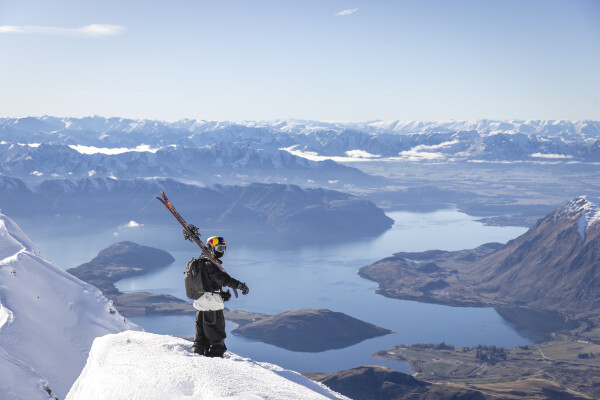
When I catch up with him, it's 2:30 pm in Revelstoke, British Columbia (BC), his home away from home for about five months of the year. The pristine powder and untamed terrain of BC have quickly become his playground, not only as a more convenient base for the industry's biggest competitions, but because the uncertainty it offers—new terrain types, unpredictable conditions—ultimately pushes him to progress. ‘Having skied in Wānaka for such a long time, I'm so familiar with the terrain,’ he says. ‘I know which zones to go to when it snows a certain way. You become a bit of a mad scientist when you chase a life in the outdoors.’
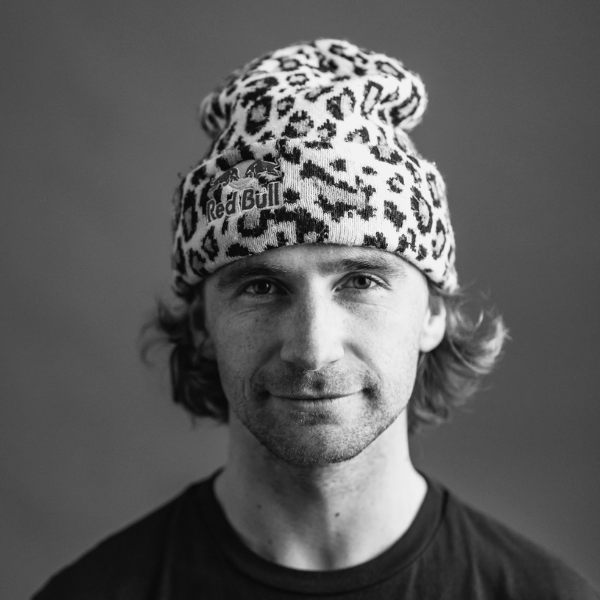 Yet beneath the generous snow dumps of BC, it's clear as a bluebird day that Wānaka still holds a special place. Growing up in a snow-centric family, with father Peter serving as the country's lead assessor for pro-level avalanche education and a heli-ski guide, Finn was on snow at the age of two. ‘My earliest memory is skiing at Treble Cone, more like skiing under my mum or dad's legs on the learner slope,’ he shares. ‘It's still my favourite resort, and it's pretty cool to come back and ride the place that started it all.’
That pull homeward is central to everything Finn does. As he tells me, where many professional skiers in his position would simply relocate to the Northern Hemisphere full-time, there's a magnetism to Aotearoa that keeps drawing him back—something he's now working to capture on film. In collaboration with director and editor Hunter Paull, Finn is putting the finishing touches on a short film that illuminates the contrasts and similarities of his life split across two hemispheres: why the Southern Hemisphere demands so much time away, and why New Zealand always wins him back.
 It's a story that begins, as so many great New Zealand ones do, with a heady kind of determination. While his classmates at Mount Aspiring College were navigating university, trades and the usual crossroads of adolescence, Finn was gearing up to compete in his first Olympics in PyeongChang, South Korea, competing in halfpipe and slopestyle at just eighteen years old. ‘In one word, it was surreal,’ he reflects. ‘Although at the time it didn't really feel like that—you're still just figuring out who you are and going about life, but now I look back on it, realising the magnitude of what the Olympic Games are, it definitely holds a lot more weight and impact on my mind now than it did at the time.’
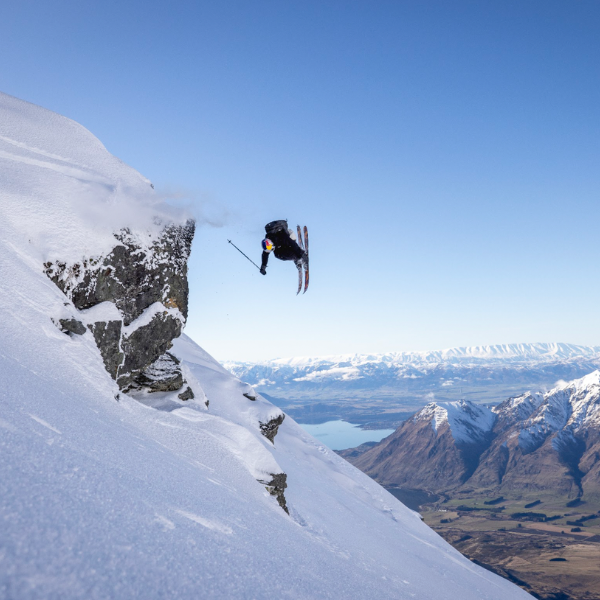
But for all the opportunity that the Olympic pathway offered (and it was clear Finn was on a trajectory for great success in this space), he decided to pivot, trading the controlled precision of slopestyle for the unpredictability of freeride. Now, for those new to this specific discipline, freeride is skiing in its rawest form; no groomed jumps, no choreographed runs, no safety net of repetition. Instead, riders like Finn navigate vast, uncontrolled mountain terrain, reading the landscape in real time and making split-second decisions about where to go, how fast, and whether to go at all. It's interesting that, as a skier raised by his very own live-in avalanche educator, Finn chooses to embrace freeride at all. After all, there's a very thin line between risk and reward.
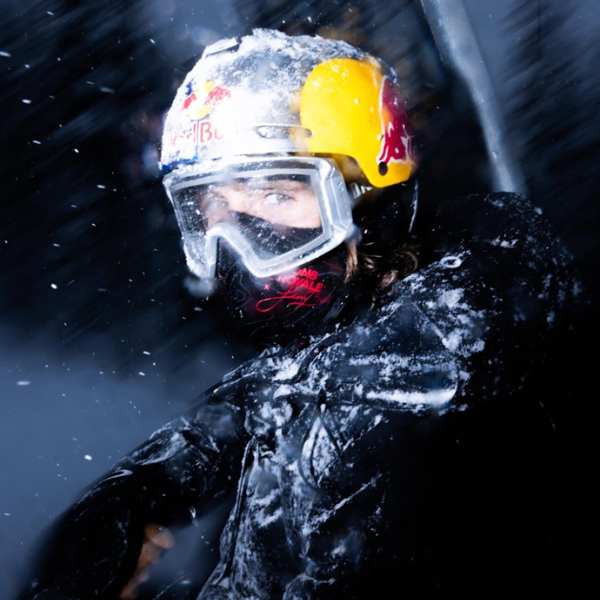 Nothing embodies this clash of contrasts quite like Natural Selection, of which Finn recently claimed a top-three finish in Alaska, a result that cemented his position in this discipline in no uncertain terms. In the globally renowned competition, riders like Finn have no prior knowledge of the run they will embark on, including any practice runs—the first time skiing is during the contest, essentially your final run. ‘Trying to conceptualise what the terrain is going to look like when you've never ridden it before, that's probably 80% of it,’ he says. ‘The other 20%? Putting it down when it counts.’
Was making the top three vindication of Finn's decision to step away from his Olympic pathway? According to Finn, it felt less like vindication and more like a cumulative reflection on the journey itself, one he credits as nothing but a pleasure. ‘The experiences and learnings I've had over the last four years, since the last Games, have felt much broader than what I think I would have learned if I'd stayed in that same category of skiing. For me, that's been the affirming feeling—that internal confidence that you're aligning to what you believe in, both as a person and as a skier. And so to get a good result like that, it's icing on the cake, but I don't try to rely on results to dictate how you feel about what you're doing.’
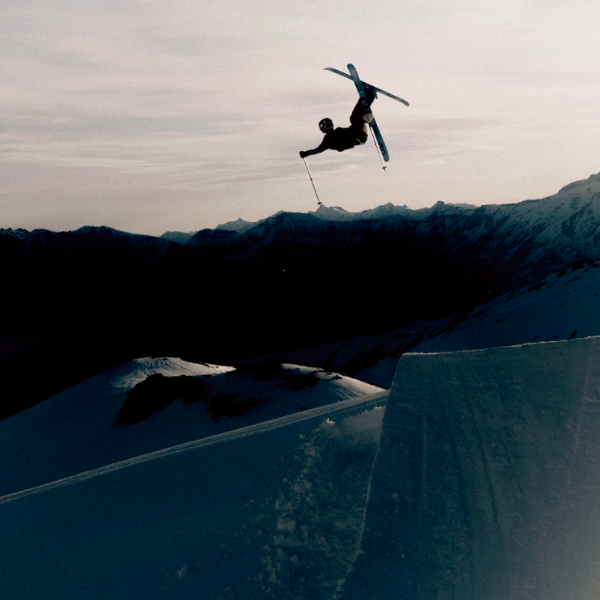 Away from the slopes, and in his off-season downtime, Finn has been expanding his creative portfolio: collaborating with his sponsors on signature product design, and adding the finishing touches to his short film, a film that is, in many ways, a meditation on the very journey that brought him here—the decisions made, the paths chosen, and the ones he isn't ready to leave behind just yet. ‘You can never connect the dots looking forward, but you can looking backwards,’ he says. And for Finn Bilous, every single one of them has led exactly where it was supposed to.
Advertisement