Taika Waititi on imperfection, curiosity and the beauty of being human
Taika Waititi has made a career of finding the funny in the darkness. But while his films may arrive wrapped in comedy, there is almost always something tender lurking underneath: a deep belief in people and an affection for humanity at its most imperfect and exposed. In conversation with Anna Lee, he opens up about what keeps him curious—and freedom of never quite fitting the mould.
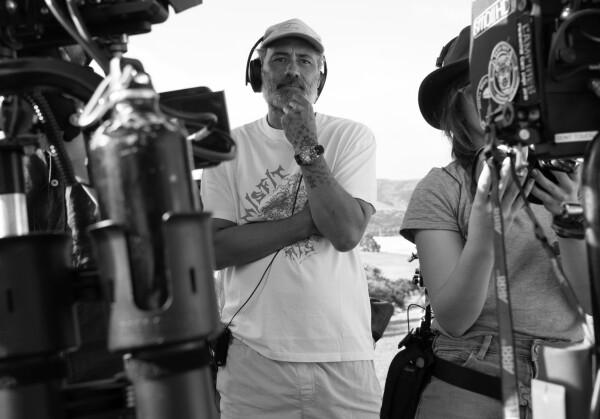
Taika Waititi has always understood that the absurd and the deeply human are rarely far apart.
His films have taken in dysfunctional families, lonely children, vampires, superheroes and imaginary friends, but beneath the jokes and fantastical worlds, there is a recurring fascination with what it means to be human. He has an instinct for a particular kind of collision: the moment when laughter catches in your throat, when something funny gives way to something unexpectedly moving.
Perhaps that is why his new film, Klara and the Sun, feels so instinctively his.
Based on the novel by Nobel Prize-winning author Kazuo Ishiguro, the story follows Klara, an ‘Artificial Friend’ played by Jenna Ortega, whose extraordinary capacity for wonder draws her into the life of a mother and daughter in crisis—and towards a dangerous secret.
He stumbled across the book almost by accident, picking it up as an “airport read” before a flight. What began as an impulsive choice would ultimately lead him somewhere familiar.
“It reinforced how I’ve always seen the world,” he says. “You definitely go through phases of feeling cynical or over it, and I think that my films in general have tried to remind people that the world’s a cool place; that cinema doesn’t always have to be depressing, and it’s okay when nice things happen. And then it also reminds me when I’m making them.”
It is an unexpectedly earnest sentiment from a filmmaker whose work has become synonymous with irreverence. From Boy and Hunt for the Wilderpeople to What We Do in the Shadows, Thor: Ragnarok and Jojo Rabbit, for which he won an Academy Award for Best Adapted Screenplay, Waititi’s films return to outsiders, misfits and the complicated business of belonging.
“I’m probably a vulnerable, tender person at heart,” he admits. “I care deeply about humans. I get frustrated with humans all the time, but deep down, I’ve just always had a love for human beings and for their qualities. Just wanting to see the ‘specialness’ in everybody.”
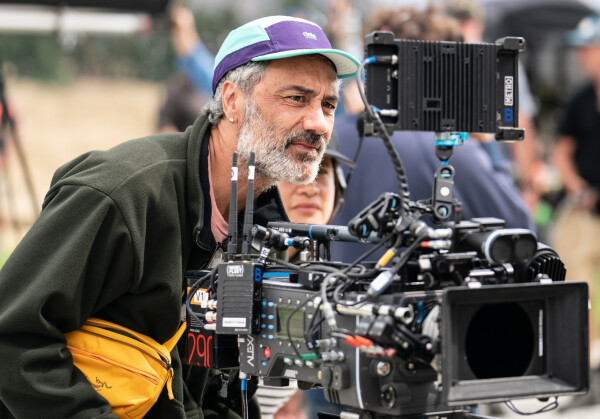
For someone whose life plays out on such a grand scale, from blockbuster premieres to the glittering machinery of Hollywood and his marriage to global superstar Rita Ora, there is something strikingly uncomplicated about the way Waititi talks about what matters to him. What seems to hold his attention is not so much the grandeur of life as the ways we stumble, slip up and find our way through.
“I think it's the mistakes and being able to live with those mistakes, and not beat yourself up. It’s probably like the ideal, when it comes to being human—we’re not all like that; we always beat ourselves up and don’t learn from mistakes. But a very human quality is to not know what to do and be bumbling our way through things.
“What makes us special is the imperfection and the fact that we are clumsy and constantly banging into each other and messing things up. I think that’s sort of our superpower, really. And how boring would it be if everyone was perfect? If you knew that everyone was perfect, you would know how life was going to unfold for you, and that’s a boring adventure if you already know what’s going to happen.”
For Waititi, perfection is not simply unattainable; it is fundamentally uninteresting.
“I think it’s very important, as well, for us to keep talking about this unattainable pursuit of perfection, especially for teenagers and young kids. I’ve got two daughters, and I’m always thinking, ‘You guys are being exposed to so many ideas of what you’re supposed to look like, what you’re supposed to be like, who you’re supposed to be’, and I think a lot of kids might lose sight of this idea of, ‘It’s okay to just be yourself’. It’s okay to be bored, to not have the ‘right’ clothes that everyone else has, and look the ‘right’ way. We have to constantly remind everyone that perfection is just not real.”
It may also explain why Waititi has so often been drawn to characters who, in one way or another, find themselves slightly out of step with the world around them. He considers the idea for a moment.
“I think that every person feels like [an outsider] at some point. All of us, I believe, go through life thinking—and we are—the star of our own movie. And all your friends and everyone that comes in and out of your world or your day are like day players for you. They come in, and they’re in your story. So when you’re the main character, I think you can also sometimes feel like an outsider, that no one else understands you. I find that all the time.
"I think we all feel like we’re living on the outskirts in some way. But that’s why all of these stories are so relatable.” It is a characteristically Waititi way of putting it: everyone is the centre of their own story, and that is precisely why we can all feel peripheral in someone else’s.
For Klara and the Sun, that sense of perspective is particularly important. Klara sees the world with a startling openness, and when writing the script, Waititi was conscious of the fine line between preserving that innocence and making her simplistic. She needed to be naïve without becoming frustrating, unusual without tipping into “too cutesy”.
“It’s just a total balance when you’re trying to work that stuff out,” he explains.
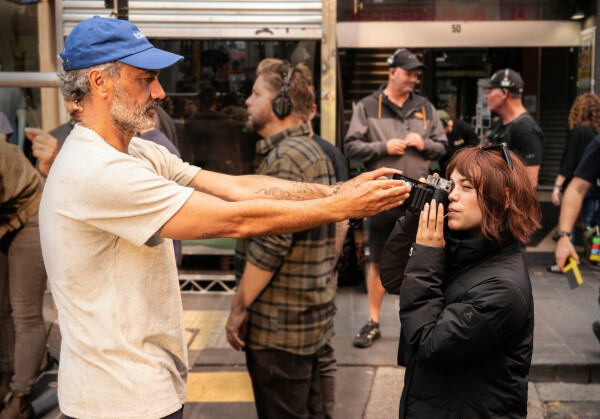
Ultimately, though, Klara came alive through Ortega, whom Waititi is quick to distinguish from her best-known role.
“What happens is you cast someone incredible like Jenna who brings her own personality and her own energy to it, and makes the character her own.
"Jenna’s not like the Wednesday character, and she’s not dark and morose and quiet and in her own head. From what I know of her, she's very open and adventurous and curious about the world. She’s always listening to new music—when we were shooting, she was going through her Beatles phase of just non-stop Beatles, then she went and did a drifting course down in South Auckland. Just filling up her days with stuff because she just wants to learn and try things.
"You want that—that curiosity, that idea of, ‘I’m just going to try all these things and see if anything sticks’—I think she’s been like that her whole life. She’s incredible.”
The qualities he admires in Ortega—experimentation, instinct, a willingness to see what sticks—mirror his own creative approach.
That spirit is part of what keeps drawing the Wellington-born filmmaker back home, where the scale of a production gives way to something more intimate. Working on Klara and the Sun, alongside Ortega, Amy Adams, Mia Tharia, Aran Murphy and Kiwi actor Rachel House, has offered another glimpse of what he loves about making films in New Zealand.
“It reminds me it’s such a cool job that I get to do. And work with fun people, and make entertainment. Then you have the crew members and stuff like that who make shooting such a joy, so it feels like more of a family situation when you’re working in New Zealand.”
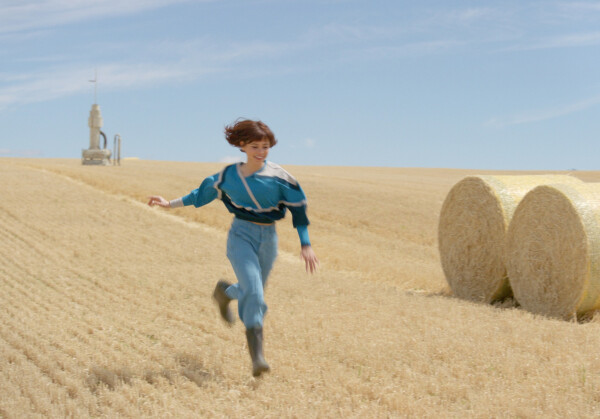
Waititi describes Aotearoa as a “real hero” in the film, which features the South Island’s vast wheat fields, rolling hills and golden light.
Now, after six months away from writing, Waititi is back at his desk.
“I’m really excited to be writing again. After a while you burn out a little bit, and it’s hard to get excited about typing. So I took a break, and it was awesome. I just watched films and directed things and did some acting for other people, and that was a cool way to kind of rekindle my love of storytelling.”
He is currently working on several scripts, with plans to direct James next year—an adaptation of Percival Everett’s acclaimed reimagining of Huckleberry Finn, told from the perspective of Jim.
“That will be an interesting subject to tackle in my style. A bit daunting… because it’s not going to be a comedy about slavery,” he notes. “Making a beautiful drama, that is maybe just a slightly different take on all these films and these stories.”
It sounds like another departure. But with Waititi, departures are rarely as radical as they first appear. His career has resisted easy categorisation: actor, writer, director, producer, comedian, visual artist, occasional pirate of the Hollywood establishment. He has never seemed interested in choosing one lane and staying there.
Whether he is making a story about a boy growing up in rural New Zealand, a group of undead roommates, a Norse god or an artificial girl trying to understand love, he keeps returning to the same familiar idea: that life is messy, that people are imperfect, and that none of us really know what we are doing—and that there is beauty in all of it.
“I want people to be okay; I just want people to be all right,” he says.
For all the scale and strangeness of his career, perhaps that is what he has been saying all along: that even in the darkness, there is still wonder in being human.
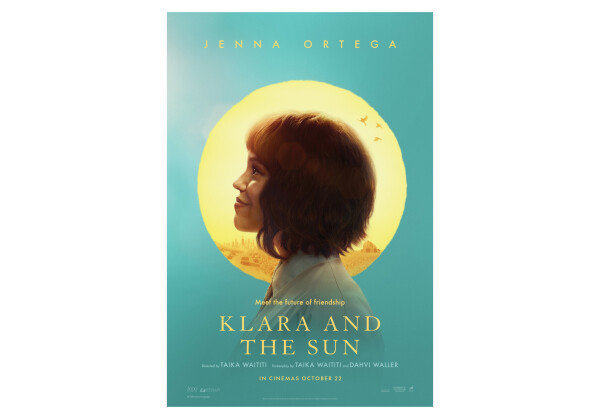
Klara and the Sun is in cinemas from October 22.
Advertisement