Demna takes over Times Square and makes history with GucciCore
It takes ambition, bravery — sheer audacity, even — to shut down one of the world's great thoroughfares and transform it into a runway. Luckily, Demna has it in spades. For his second Gucci show (and fourth collection), the Creative Director lived up to his provocative reputation, staging Gucci Cruise 2027 in the beating heart of New York City. Times Square: a feat many designers dream of, but one reserved only for those with the nerve to make history.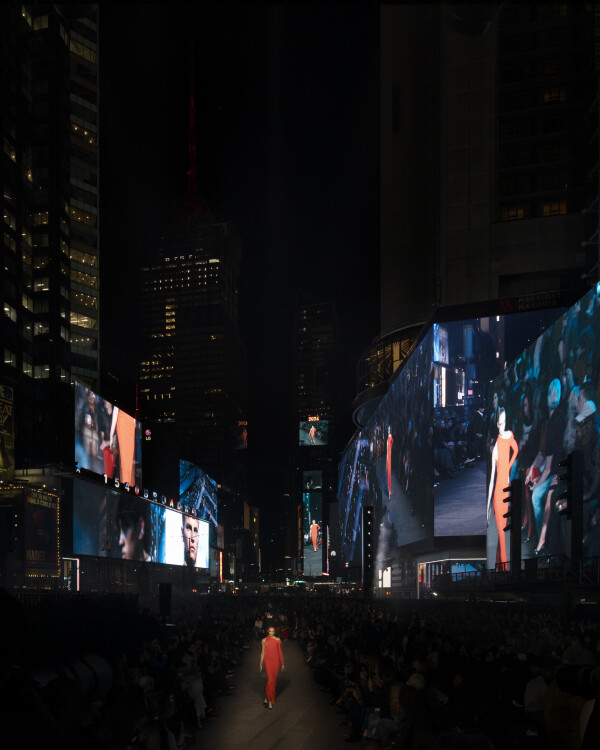
And for Demna, history was very much the point. The show was a homecoming of sorts — a love letter to a city where, 70 years ago, Gucci opened its first store outside of Italy. He wanted to place the House at the centre of its own mythology. And what better place to do that than the most oversaturated, commercially ferocious, gloriously ubiquitous square mile on Earth? After all, why go big when the biggest is ripe for the taking? 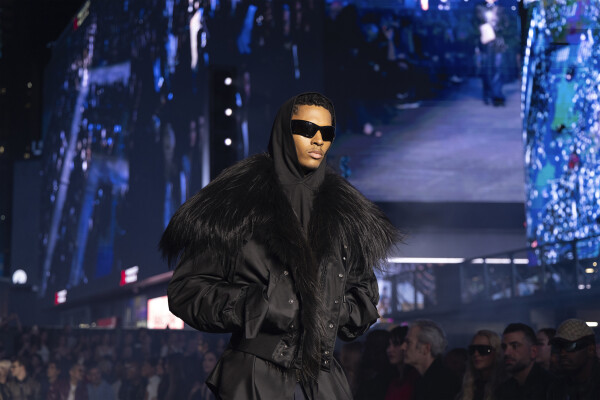
He titled the collection GucciCore, borrowing the internet's favourite suffix to make a claim far bigger than a flippant naming convention. As Gorpcore and Cottagecore before it, "core" in subcultural language denotes an essence — a way of living, not just dressing. And to be Gucci, Demna argues, is no different: not something you wear, but something you are. GucciCore is his bid to recalibrate a noun into an adjective — a house name, and its codes, into a living language.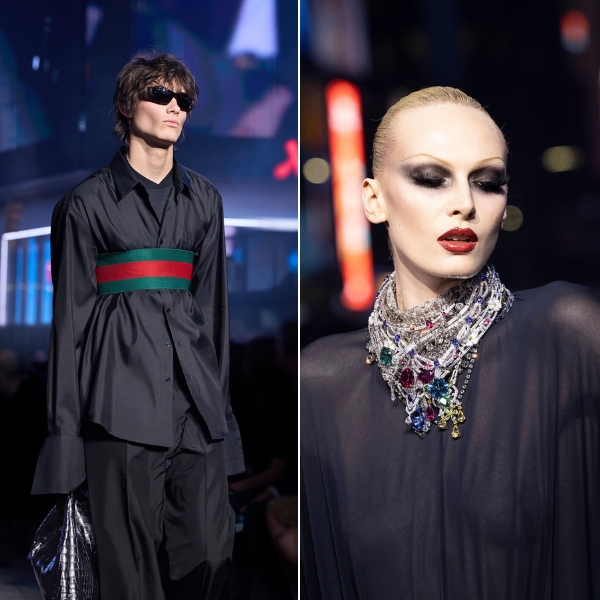
This was, as Demna explained, the fourth act. Three collections in, he'd done his homework — studied the pre-fashion classicism of La Famiglia, excavated the Tom Ford years with Generation Gucci, explored the body with Primavera. Now, with GucciCore, it was time to build: a core wardrobe of staple pieces — the perfect peacoat, the classic trench, the business suit, the essential shirt, the ultimate pencil skirt — anchored in the House's stylistic language. And perhaps more importantly, his hallmark character studies approach arrived here in its most relatable form yet. Of the people, for the people.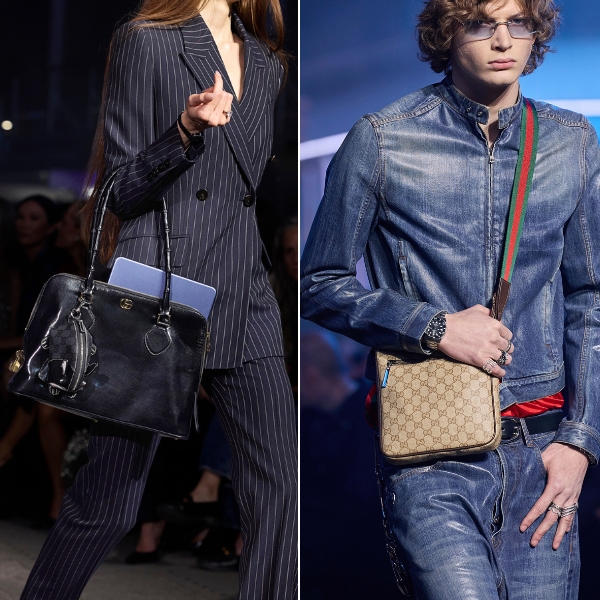
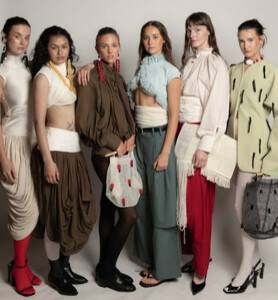
There were businesspeople and stockbrokers in pinstripes and backpacks—polished and practical. Socialites swept past in exquisite evening gowns of croc-scale sequins, beaded fringe and feather embroideries. Skaters sauntered in low-slung, slouchy denim with the attitude to match. Ladies who lunch arrived in shearling coats and studied insouciance. Anywhere else, this casting might have felt dystopian, off-kilter even. But, as Demna so masterfully captured, it's a playful portrayal of what and who New York City is. 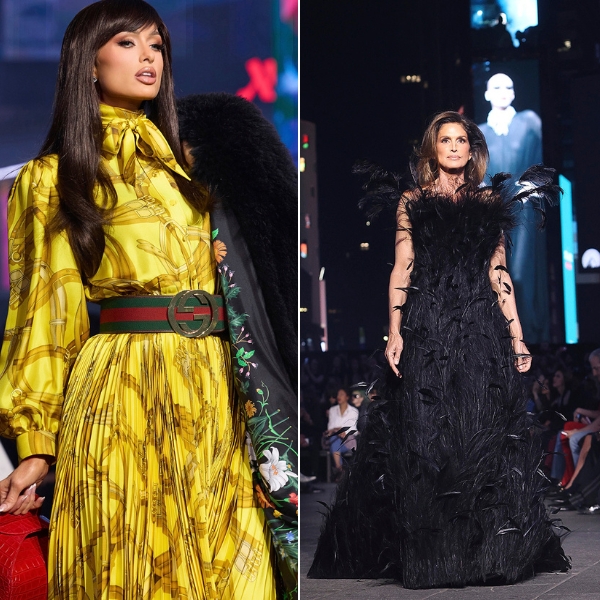
To tell that story, he called in some friends — and in doing so, extended the La Famiglia spirit into its most star-studded chapter yet. Cindy Crawford. Tom Brady. Paris Hilton, in a full leather ensemble and uncharacteristic brunette hair. Less celebrity casting, more deliberate characterisation — faces that carry their own New York mythology, their own chapters in the city's story. It was campy, sexy, and above all, theatrical — a welcome reprieve from the studied restraint of houses that have spent the better part of a decade disappearing into their own minimalism. 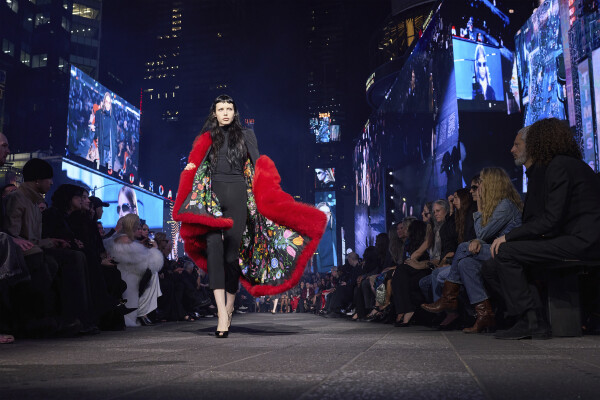
That tension — between luxury and spectacle, heritage and provocation — is where Demna undoubtedly does his best work. Where others see a danger zone, he sees opportunity. And it takes exactly that kind of audacity to shut down Times Square and make it the only stage big enough to tell the story of what Gucci is becoming.
Advertisement