Jonathan Anderson disrupts the formal house codes of Dior
“Ultimately, the way I work is just collecting things or experiences throughout the process and then kind of infiltrating them in,” revealed Dior Creative Director Jonathan Anderson to press ahead of his F/W 26 Dior Menswear Paris Fashion Week show. I like to imagine Anderson — in his hallmark nondescript jeans and V-neck sweater uniform of sorts — on daily commutes with a dog-eared notebook tucked into his back pocket, within easy reach when inspiration strikes. Eclectic musings hastily jotted down, only to later reveal clarity and unity once the initial 'what was that?' dust settles.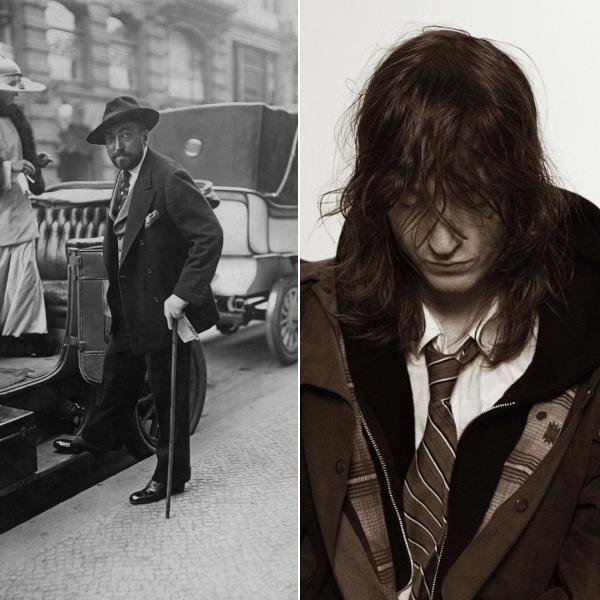
From left: Paul Poiret, Mk.gee. Images via Pinterest
For his second Dior showcase, inspiration struck in the form of two polarising references: esteemed couturier Paul Poiret and American musician Mk.gee. On paper — and at first glance — this marriage could seem destined for divorce, off-balance and slightly out of sync. And that is precisely Anderson’s point. He relishes the off-kilter, spearheading an anti-normal rebellion that pushes the fun with fashion narrative to new heights. We saw this triumphant rebellion reign during his tenure at Loewe, where Anderson single-handedly transformed the Spanish atelier into a contemporary cornerstone — underpinned by pioneering surrealism and playfulness, yes, but still masterfully nodding to the brand’s rich history of artistic craftsmanship and leather-making—a rare but compelling trait of 'the busiest man in fashion'.
Dig a little deeper into Anderson’s seemingly contrasting pairing, and the connection becomes clear: both figures were — and are — disruptors of their respective languages. Poiret dismantled the rigid grammar of early 20th-century dress, freeing the body from restrictive corsetry and shifting fashion away from traditional tailoring toward expression, instinct, and theatricality. Mk.gee, meanwhile, has a style — both aesthetically and musically — that feels deliberately unpolished, intimate, and slightly unsettling, in the best way. What binds them is not aesthetic similarity, but attitude.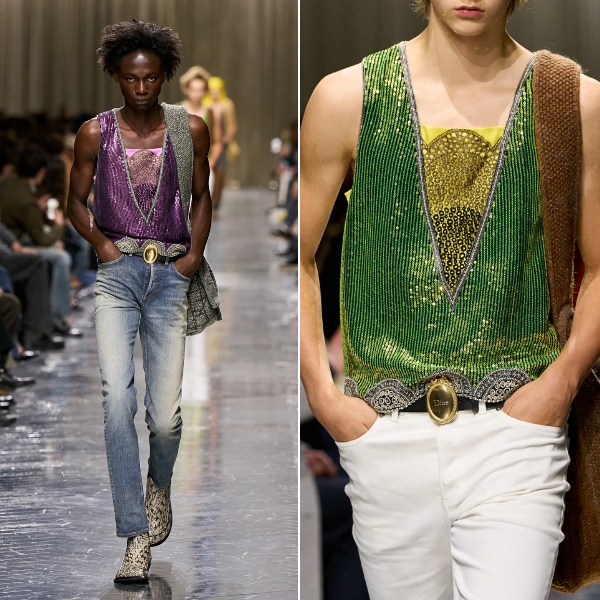
On the runway, these two worlds found unlikely harmony, materialising as a collection that resists neat categorisation — and nor should it. The opening three looks featured a sequin deep-V vest, a direct reference to a Poiret dress from 1922 that Anderson acquired. But rather than linger in historical reverence, Anderson did what he does best, pairing the vest with contemporary-cut jeans, exotic Cuban-heeled boots, and Dior-buckled belts to create something altogether more wearable. We also caught our first glimpse of the shaggy, often neon-dyed wigs that remained a constant throughout the showcase — conditioner or toner nowhere to be seen.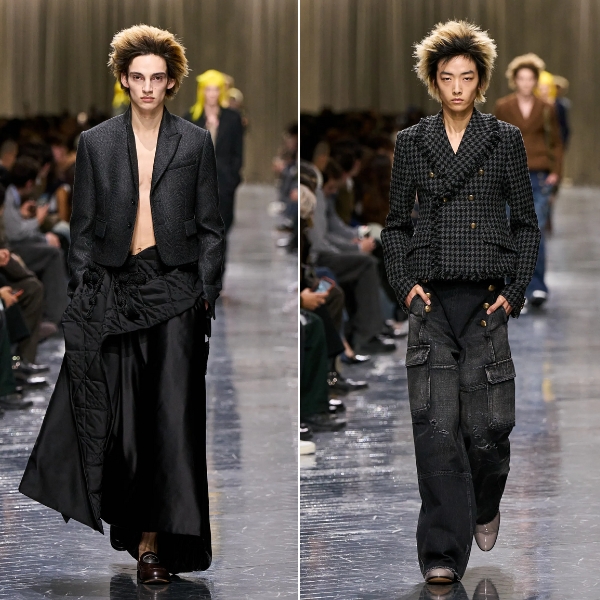
What followed was Anderson’s latest dissection of Dior’s traditional tailoring silhouettes. In keeping with the house’s longstanding reputation for conceptual — rather than conservative — tailoring, Anderson sliced and diced iconic forms that once steered the Dior ship. Think shortened 1940s double-breasted houndstooth jackets; deliberately shrunken 1960s single-breasted black jackets; and the denim-ification of the Dior Bar jacket, distressed and seemingly already well-loved.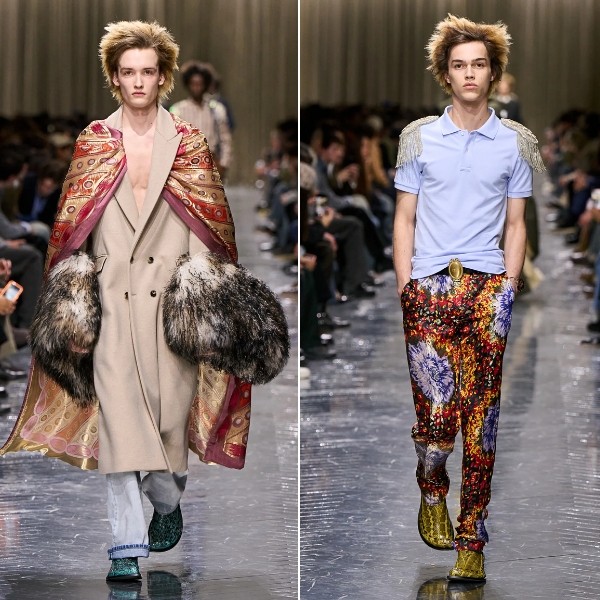
Anderson also leaned fully into the dress-up mentality he has become known for — a badge he wears with pride, and one pioneered by Poiret himself. His interpretation threw caution to the wind: preppy polos and shirts paired with diamanté-tasseled epaulettes; military jackets styled with snake-print boots; double-breasted pea coats finished with exaggerated shearling cuffs; campy silk capes tucked neatly into those same coats. All delivered with a generous side of nonchalant punk-rock attitude, unmistakably Mk.gee-coded. This isn’t new territory for Anderson. At his Dior Menswear debut last year, we saw the same unruly preppy cues, genre-blurring, and dismantling of house codes — an authentic reminder that fashion, at its best, should be fun. Think of Dior Menswear 2.0 as a not-so-quiet continuation of that debut.
Critics have been quick to question Anderson’s motives at one of fashion’s most influential and storied houses. After all, his Dior looks vastly different from the version preserved in coffee-table books and halls of fame. But look closely, and the codes are still there, threaded through the playfulness and dissection — just enough for Dior diehards to hold onto. The fabric of those codes may now feel softer, frayed even, but perhaps that’s the point. Maybe it’s time to let go of a fixed idea of Dior and allow the house, once again, to feel alive — imperfect, expressive, and very much of the moment.
Advertisement