This New Zealand docu-series argues why and how fashion’s inclusivity movement is regressing
Have you ever walked into a clothing store, full of optimism, only to leave empty-handed and disheartened, because nothing—literally nothing—fits? For those existing in larger bodies, that experience isn’t just a one-off; it’s a lifetime. Forever, fashion has sold us exclusivity, and with it, invisibility. So, whose stories and sizes are we missing?
That question sits at the heart of Cutting the Curve, a bold six-part documentary series directed by Julia Parnell and produced by writer Evelyn Ebrey. The series peels back the glossy façade of fashion’s supposed body positivity movement, exposing how quickly inclusivity turns into tokenism when profit and perception take the front seat.
What began as a 4,000-word article written by Ebrey in 2022, aptly titled ‘Why Plus-Size Models Are Not a Trend,’ last year evolved into a six-episode docuseries filmed across some of the world’s most image-conscious cities, including London, New York, and Auckland, and featuring former Remix cover stars.
There was a time, not long ago, when the body positivity movement seemed unstoppable. Fashion campaigns, runways, and billboards began celebrating softness, stretch marks, and rolling bellies. Then, the tide shifted. ‘When Kim Kardashian lost weight to fit into Marilyn Monroe’s dress, you could feel the change,’ says Ebrey. ‘Suddenly, everyone was talking about being skinny again.’
As thinness makes its glossy return via Ozempic bodies, social media algorithms, and celebrity endorsements, it’s impossible not to notice the cultural regression. It’s the new-old beauty ideal, dressed up in modern medicine. ‘We’ve normalised medicating ourselves into smaller bodies—and somehow people are calling that empowerment,’ says Ebrey. ‘It’s wild to think that the pendulum has swung so far back. There was a moment where the industry was finally starting to celebrate reality, and now it feels like we’ve regressed.’
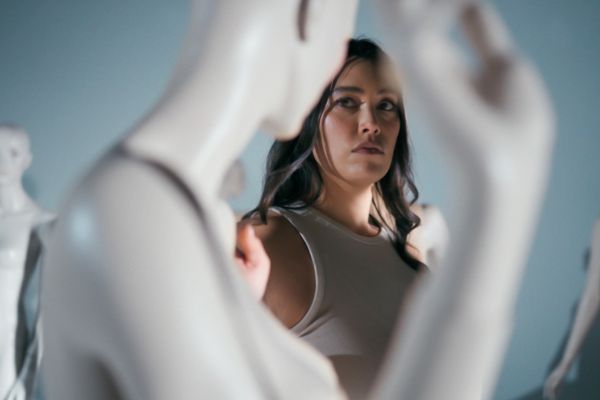
When society rewards thinness and punishes anything outside of that, it stops being about choice and becomes a matter of survival—especially in industries as cutthroat as fashion. ‘What does it say about the kind of culture we’re building if shrinking ourselves is considered success?’ she asks. ‘If being smaller is what earns applause? It’s not just about bodies, it’s about power, visibility, and who gets to be seen as valuable.’
Fashion is an expression, an art form for everybody. Everybody needs to wear clothes. So, why is it that only some people can fit the ones designers choose to make? It sucks to feel excluded, period. For plus-sized individuals, finding designer brands that genuinely cater to their bodies remains a challenge.
There are a handful of New Zealand labels that make this effort to design with larger bodies in mind, including Lost and Led Astray, Frances Lowe, Zambesi, RUBY, Kathryn Anne, House of Boom, Isla-Maree, The Carpenter’s Daughter, Florence & Fortitude, and Havilah. But while the clothes may suggest inclusivity, the models often do not. There’s still an elephant in the room. ‘Women don’t talk about how they feel about their bodies—it’s like this dark secret we all carry. We’ve internalised decades of marketing designed to make us feel bad about ourselves, so we’ll buy things,’ says Ebrey. ‘Letting go of that is really hard.’
‘Everyone says ‘love yourself,’ but no one actually means it when the camera’s off. There’s a massive disconnect between what we preach online and how we really feel in private. Body positivity has been so commercialised that it’s almost lost its bite—it’s become a marketing aesthetic rather than a movement.’
At the centre of Cutting the Curve is Isabella Moore, a Samoan-New Zealand opera singer turned curve model—one of the series’ most compelling voices. ‘I entered the fashion industry when the body positivity movement was booming— inauthentically, I might add,’ Moore reflects. ‘I haven’t experienced as many overtly negative comments about my body as some of my fellow models, but what I have experienced is subtle, a silence filled with disdain, judgment, and impatience.’
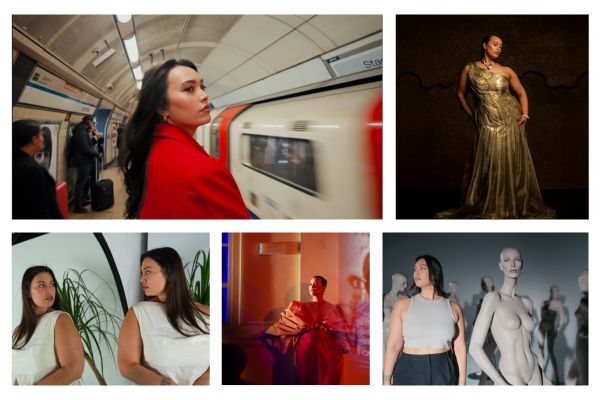
Moore recalls one London Fashion Week casting, where she felt the temperature in the room change as she approached the casting table. ‘I remember their vibe was very much, ‘Fine, we’ll let you walk, but you can’t seriously think we’re considering you.’’
As a curve and plus-sized model, the feeling of being ‘othered’ is all too familiar. ‘It’s horrible—being treated as though your presence is unwelcome, though your body is a burden. Too often, industry people forget that models are humans, not just bodies. That’s why I think kindness is everything, and it’s something that’s still massively lacking in fashion.’
Moore doesn’t shy away from calling out performative inclusion. ‘The body positivity movement was just a trend. The curve and plus-size industry is still largely performative,’ she says. ‘But I’m hoping we’re heading into a time of authentic inclusivity. People are calling out the industry, including those working within it. It’s no longer good enough for brands to just do the bare minimum with tokenistic representation and fake inclusivity. ‘
Moore embodies the complexity of not fitting the mould. ‘In Cutting the Curve, we touch on how my Samoanness doesn’t have a place in fashion,’ she says. ‘I’m considered a more ‘palatable’ version because I kind of fit Western beauty standards. That says a lot about how exclusion is still alive and well.’
Visibility, of course, doesn’t always pay the bills. ‘After returning from New Zealand Fashion Week in 2023, I came back to London a larger size and found myself with no work,’ Moore says. ‘When my agents told me companies were looking for size 16–18, alarm bells went off. I’d lost clients before because of weight gain. It sent me into a panic.’
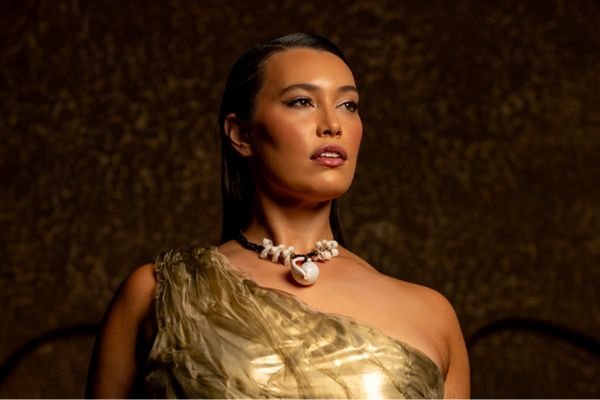
‘I even considered a weight-loss drug similar to Ozempic,’ she admits. ‘Most of the pressure has come from fear; fear of not working. Modelling is my career and my source of income. It’s hard to ignore the reality that above a certain size, your chances of being booked drop.’
Her advice to younger curve models entering the industry today is to know yourself and your worth. ‘Your opinion of yourself is worth more than any external validation. Stay strong and find your people. Connect with others who understand the struggle—connect with me!’ she says, smiling.
For director Julia Parnell, Cutting the Curve became a mirror, not just for the women she filmed, but also for herself. ‘Making this series reinforced how much of our self-worth is shaped by systems far beyond our control; not just fashion, but also diet culture, social media, history, and consumer-driven greed,’ she reflects. ‘It reminded me that change doesn’t come from shame; it comes from compassion. You can’t hate yourself and love yourself at the same time.’
From the moment we became aware of our bodies, we’ve been told that we need to be thin. Body image isn’t just a fashion issue; it’s a psychological one. Eve Hermansson-Webb, Senior Clinical Psychologist at Eating Disorder Therapy Aotearoa, sees the effects daily. ‘We live in a culture that constantly tells us to shrink ourselves, so it’s no wonder so many people end up in cycles of guilt, deprivation, and shame,’ she explains. ‘People in larger bodies are more likely to have eating disorders go undiagnosed—or even praised as ‘healthy’—because our culture glorifies weight loss without recognising its harm.
Her programme, The Body Acceptance Journey, helps women understand why they feel the way they do about their bodies. ‘It’s not about learning to love your body overnight,’ she says. ‘It’s about living more peacefully within it and treating it with kindness and respect.’
Seeing diversity in media, she adds, isn’t just empowering; it’s protective. ‘Representation helps challenge the narrow ideals that feed dissatisfaction. And it’s always worth asking: who profits from me feeling this way about my body? There are entire industries built on women’s insecurities.’
Visually sumptuous and emotionally sharp, Cutting the Curve is a moment of reclamation: women who have been told to take up less space, standing shoulder to shoulder, taking up all of it. And maybe that’s the real point. The fashion industry can shrink and expand, trends can come and go, but power lies in presence. As Moore puts it, ‘If the industry won’t include us, we’ll build our own.’
Advertisement