On furniture and the future—in conversation with multi-disciplinary artist Ran Tondabayashi
Following her successful collaboration on Ligne Roset’s Togo, Monica Tischler probes the multidisciplinary artist about creativity right now.
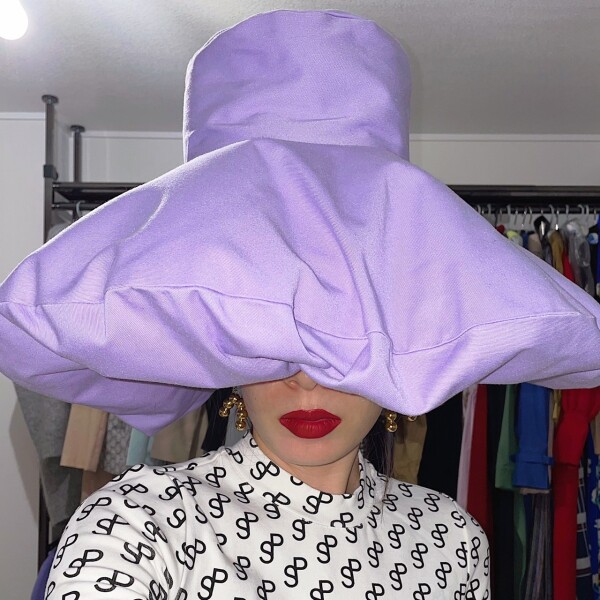
While this moment right now tilts towards curated perfection on our screens and social feeds, Japanese multidisciplinary artist Ran Tondabayashi finds beauty in the unpolished—what she describes as a compelling sense of discomfort and strangeness. Her work commands a second look, prompting viewers to pause and question its meaning in the best possible way. Having collaborated with brands including G-Shock and Adidas, Tondabayashi’s designs have gained global recognition. Now, with a limited-edition fabric designed for the Togo chair by Ligne Roset, Tondabayashi’s signature playful style can be found in homes across New Zealand.
How would you describe your style, both in your personal aesthetic and your professional work?
The things I like are fairly easy to understand. Rather than subtle beauty, I’m drawn to objects that immediately catch the eye. Most of my inspiration comes from what’s around me in everyday life. I like using familiar objects such as food, cosmetics, screws, animals, and body parts. Right now, I enjoy client work more than creating pieces purely as an independent artist. I like thinking about what to create in response to a given theme or brief. I make what I want to make, while working within the client’s requests.
What was the inspiration behind your design for Ligne Roset?
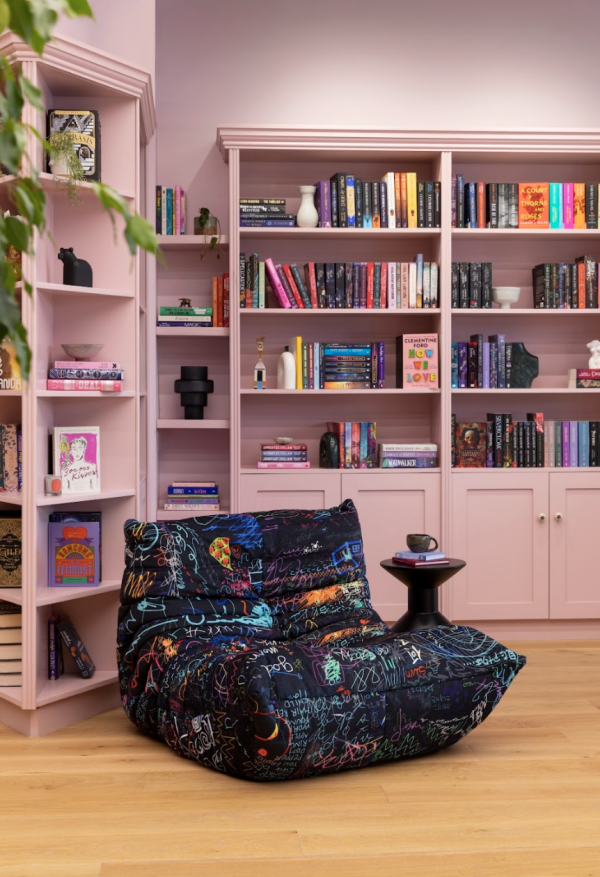
In Japanese stationery stores, there’s usually paper near the pens for customers to test them out. I’ve always found the various words written on it interesting. Because it’s a space where anyone can write, it has a relaxed, unselfconscious charm that feels quite different from graffiti. I’ve always liked that quality and often thought I’d like to use the idea in some way. Then, when I was thinking about what kind of design could work on Togo, I realised it might be interesting to use the Tameshigaki, meaning ‘test writing’ in Japanese. When the opportunity came about to collaborate with Ligne Roset, I happened to be sitting on my own personal Togo at the time, so it felt like fate.
What elements, in your opinion, truly comprise luxury design?
I think it comes down to a designer’s way of thinking and how they live their everyday lives.
How do you incorporate quality design into your home?
I try to experiment with different balances. I actually like spaces that feel slightly cluttered, where the things I love are a bit mixed together. I have the Togo fireside chair and footstool in Tameshigaki in my living room. What I love most about Togo is its balance. The form is bold and unusual, almost like human skin, yet it never feels overly avant-garde.
Did you always know you wanted to work in the creative industry?
After graduating from fashion college in Tokyo, I decided to become a Manga (comic-style) artist, and that was when I started drawing, using pens and acrylic paints at first. Then, watching a film by [Czech filmmaker, animator and artist] Jan Švankmajer, led me to start making collages. From there, I felt my world expand beyond just drawing. Becoming an art director was never something I had planned. When Japanese singer-songwriter Aimyon made her major debut, I was asked if I’d like to direct her artist visuals and cover artwork. That was how it all began. I have always admired creative work, but at first it felt like something distant, something other people did. I never imagined I could do this kind of job myself.
What advice would you give an emerging artist or designer looking to define their own signature style?
I think it’s important to pay close attention to what excites you, and to keep making a lot of work. Over time, originality will naturally emerge from that.
What is your vision for the future of your work?
More than anything, I hope I can keep being completely absorbed in making things for years to come. Whatever interests me, I’d like to take it on, regardless of genre or discipline.
I have countless ideas in my head, and I’d simply be happy to have more opportunities to bring them to life.
With thanks to Ligne Roset Japan for assisting with translation.
Advertisement