
Harper Finn on his latest album and what his new era looks like
Over the past year, Harper Finn's world has been anything but still. Splitting his time between touring globally as the keyboardist for Balu Brigada and performing his own solo shows in New York and London, Harper has been in constant motion—both physically and creatively. Now, after a whirlwind of travel and growth, Harper is stepping into a new era with his latest album, Silo Park—a body of work shaped by distance, self-discovery, and the contrasting worlds of Aotearoa and New York. We caught up with him to talk about how those experiences have influenced his sound, what the past year has taught him, and what comes next.
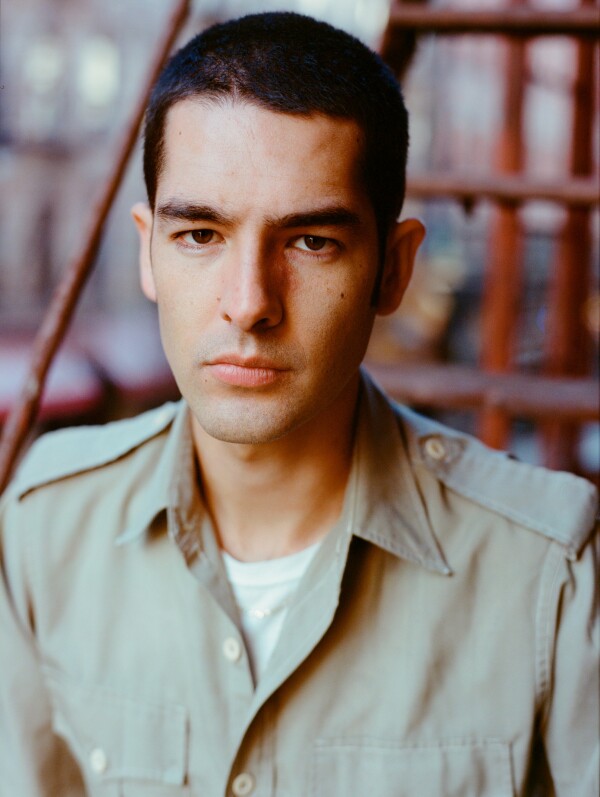
How does living between New York and New Zealand influence your creativity, and journey as an artist?
I think, well, for this record, moving from New Zealand to New York was the biggest inspiration. It’s probably as far away as you can get from New Zealand. Just being in such an unfamiliar environment made me feel uncomfortable and question myself, which really pushed my songwriting to a more honest and vulnerable place. It put me out of my comfort zone, and that’s when interesting things happen or you learn a lot about yourself. That distance from home put me into a space I’d never been in, and then coming back and reflecting on it really helps me see the growth I’ve gone through. Only when I come back to New Zealand do I really see how far I’ve come.
Tell us about your new album, Silo Park. What was the inspiration behind the album, and how is your new music different to music you’ve released in the past?
Silo Park was predominantly influenced by moving to New York, the experience of growing up a bit in a different city, and finding out who I am while also introducing myself to new people and environments, testing myself with different situations and relationships. I guess it’s a place where you can really experience life, a lot of life very quickly. The album recounts that first initial move over there. I started writing it in the winter, reflecting on my first year in New York while being alone in my apartment. It was my first New York City winter, my two flatmates had gone, and I was living by myself in a foreign city, which, of course, is summer in New Zealand. I was in a very unusual place, and I only had my songwriting to keep me company and comfort me.
How do you want your music to resonate with your fans? What story are you trying to tell?
I guess I’m trying to tell them about a year in my life that really changed me, probably one of the most important or significant years in my life. I’ve been
telling people, the friends who always ask me what’s going on with my life or my love life, that it’s all there in the music. The details, the places, the situations—maybe not the names—but all the details are there. What happened in real life is what the lyrics say.
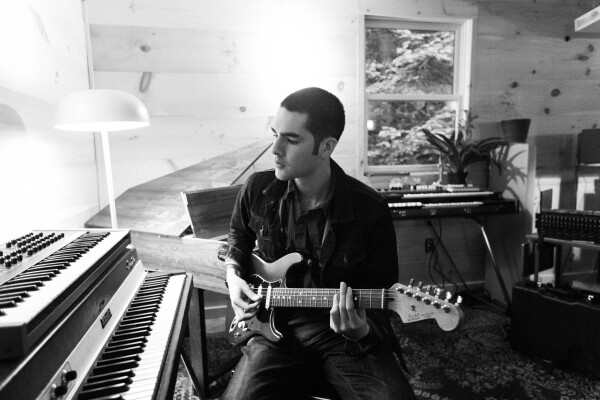
How does launching your music in NZ compare to launching your music while in New York?
Launching my music in New Zealand feels just a little bit more personal. I’ve played more shows there, and I have more friends and family who have known me for longer, so there’s a greater sense that people have seen the journey. In New York, it feels like a fresh start, which is exciting in its own way, but there’s something really satisfying about coming back home and playing in front of familiar crowds, in front of people I recognise, and feeling them see the
evolution, or how the journey has gone so far.
What is your favourite part of your world that you get to live in because of music?
I think recently it’s been the ability to travel. I feel very grateful to have had the opportunity to see how amazing it is when music puts you in places you never thought you’d be. Not only do you get to visit these incredible places, but you also get to have amazing experiences going up on stage and playing in front of audiences. What was really special was playing in front of non-English-speaking or foreign crowds and having that connection with a country or city that speaks a different language. Up until that moment, you might feel like people haven’t understood what you’ve been saying, and then you get on stage, play a show, and see people’s faces react in a way that makes you feel incredibly connected to them.
Advertisement