Gucci’s High Jewellery collection reimagines the House’s iconic codes
Demna’s Gucci looks to the natural world—and the house’s own visual vocabulary—for a new expression of High Jewellery.
A flower is rarely just a flower at Gucci. Nor is a rope simply a rope, or a horsebit merely a piece of hardware. For more than a century, the
house has built a visual vocabulary from these references—botanical, equestrian, nautical—returning to them again and again, each time finding a different way to make them feel relevant for the now.
In its latest High Jewellery collection, those familiar symbols are taken out of their usual context and given a new scale. The motifs that have appeared on scarves, handbags, shoes and ready-to-wear are now interpreted through some of the rarest materials in jewellery: exceptional gemstones, hand-worked metal and techniques that, we are told, require months of precision.
The collection begins with Gucci Flora, perhaps the house’s most recognisable celebration of the natural world. The motif first appeared in 1966, when illustrator Vittorio Accornero created the now-famous floral design for a silk scarf commissioned as a gift for Grace Kelly. Since then, Flora has become one of Gucci’s most enduring signatures, and is one that continues to be revisited—from textile to scent—without ever looking quite the same.
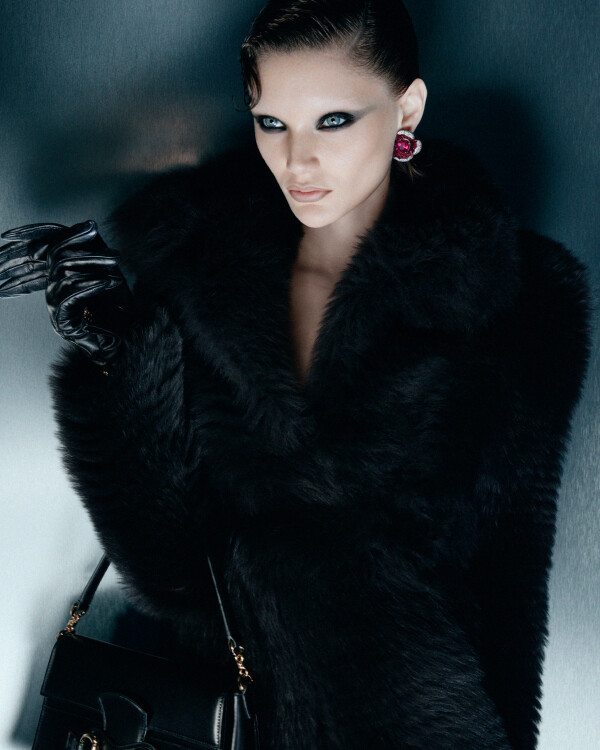
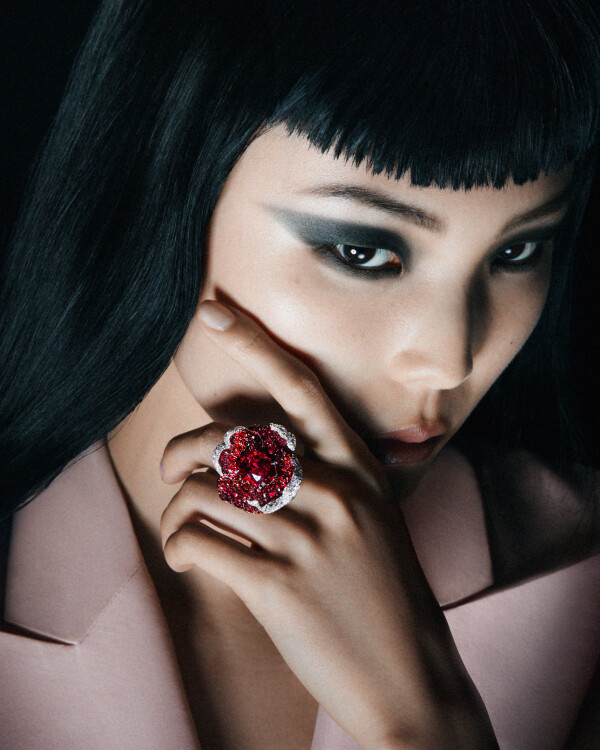
In High Jewellery form, the flowers clearly become more sculptural. Poppies are rendered in vivid rubies and rubellites, with titanium petals layered to create volume and movement. Lilies, inspired by the signature flower of Florence, are reimagined in graduated blue sapphires and diamonds, shifting between deeper and lighter tones. Orchids, peonies and other botanical forms appear throughout, each capturing a different mood, an understanding of the fragility of flora.
There is a tension in these pieces between permanence and ephemerality. Flowers are among the most temporary forms in nature, yet here they are preserved in materials designed to last indefinitely.
That idea of transformation continues in Gucci Nodo, where another familiar symbol—the rope—is reconsidered. First introduced by Gucci in the 1960s, the nautical motif has long carried associations with travel, craftsmanship and the sea. In this collection, it becomes a chain that appears almost textile-like, winding around the body with a sultry kind of softness.
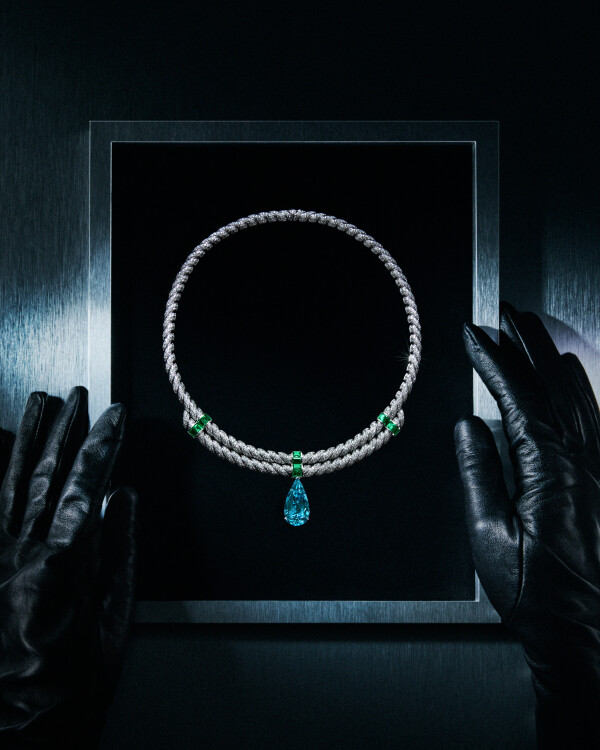
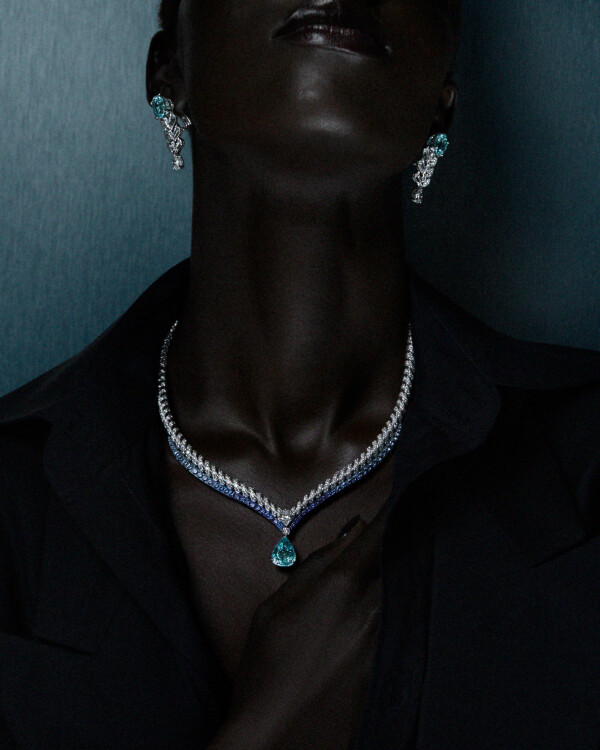
The colour stories shift with the mood of the ocean itself. Aquamarines and emeralds suggest clear summer waters, while black diamonds, black ruthenium and yellow sapphires offer a darker, more evening interpretation. Paraiba tourmalines bring flashes of blue and green that feel almost electric.
Elsewhere, the house turns inward, exploring its own identity through Everlasting G and Iconic Signatures. The Gucci ‘G’ is stretched into an elongated geometric form: less a logo and more a pattern of light. The Horsebit—originally inspired by equestrian equipment before becoming one of Gucci’s most recognisable codes—is translated into diamond and gemstone compositions, while the Marina Chain draws on the world of yachting and the movement of curved metal links.
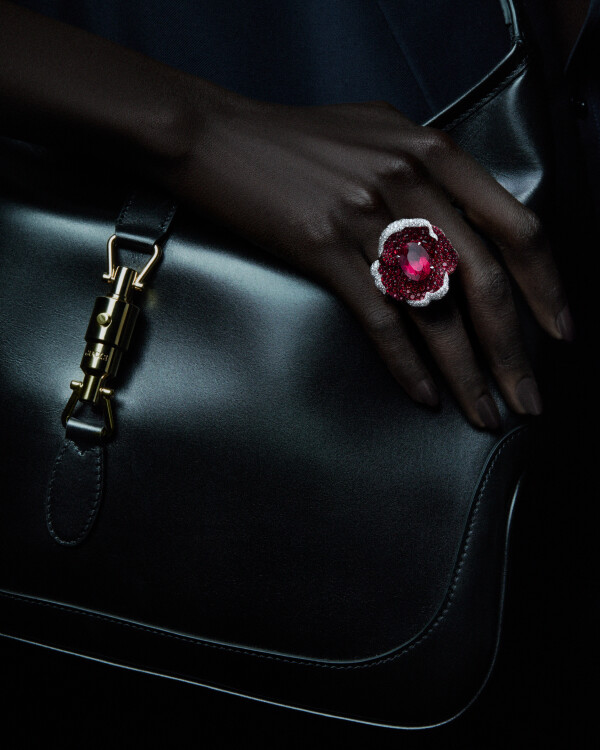
Despite their intricate design, what makes these motifs interesting is their familiarity. They are not new symbols waiting to be discovered; they are ones that have accumulated meaning over time.
The work, then, is not in creating recognition, but in finding new ways to look at something already known.
For luxury houses with long histories, the archive is both an asset and a challenge. Too much repetition can make a signature feel fixed; too much reinvention can make it disappear. High Jewellery offers a rare opportunity to revisit those codes at their most extreme—where a simple flower, a chain or a piece of hardware can become something closer to a work of art. And at Demna’s Gucci, it clearly does.
Advertisement