Max Mara at 75: Inside the Italian house’s enduring legacy
75 years of tailoring expertise. 75 years of timeless elegance. 75 years of innovation. As Max Mara celebrates its milestone anniversary, Lana Andelane takes a look at the brand’s enduring legacy.
They say you can’t know where you are going until you know where you have been. For Max Mara, the future has always been built upon a storied history of innovation, sartorial expertise, and technical excellence. As the house marks its 75th anniversary, it turns its gaze to the past, to honour the foundations that will shape its next chapter.
Before it became synonymous with timeless tailoring and its iconic camel coats, Max Mara began with a singular ambition. It all started in Reggio Emilia in 1951, when 24-year-old law graduate Achille Maramotti set out with a clear vision: to create beautifully made clothing for real women. Tailoring came naturally to him: his mother, Giulia, had founded a local sewing school that taught traditional pattern-cutting techniques. In the school’s dining room, a talented student sewed Maramotti’s first overcoat design, inspired by French couture. Facing an influx of orders, Maramotti began to look to American industrial manufacturing in order to streamline the processes. It was here he forged a new model of Italian fashion—one that married modern production with artisanal craftsmanship, forming the foundation for the Max Mara we know today.
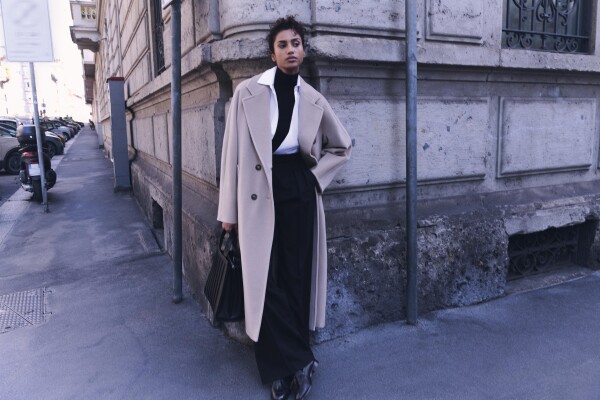 Max Mara Fall/Winter 2026.
Women were, and always have been, central to the house and its founding mission. In the 1950s, women were becoming increasingly active in society, and Max Mara’s offering—a synthesis of sophistication, accessibility and functionality—became their perfect ally in facing the world. From refined fabrics that cosseted the body to impeccable tailoring designed to fit and flatter, Max Mara created clothes that accompanied women through everyday life: an ethos that remains as true today as it did 75 years ago. Its ready-to-wear collections continue to inspire that confidence, empowering women to look and feel their best. As Max Mara Fashion Group board member, Maria Giulia Prezioso Maramotti, puts it, the right coat can make us feel ‘more confident, stronger, and more ready to leave our mark on the world’.
And these coats continue to be a cornerstone of Max Mara today. From the very first brushed tartan piece for Fall/Winter 1952 to the iconic Teddy Bear coat of 2013, the brand has sat at the forefront of outerwear for 75 years. A key touchpoint, however, is the foundational 101801—a 1981 silhouette that blended traditionally masculine, oversized proportions with elegant kimono sleeves and a refined wool-cashmere blend. The brainchild of French designer Anne-Marie Beretta, this revolutionary style is still produced today as it was originally conceived.
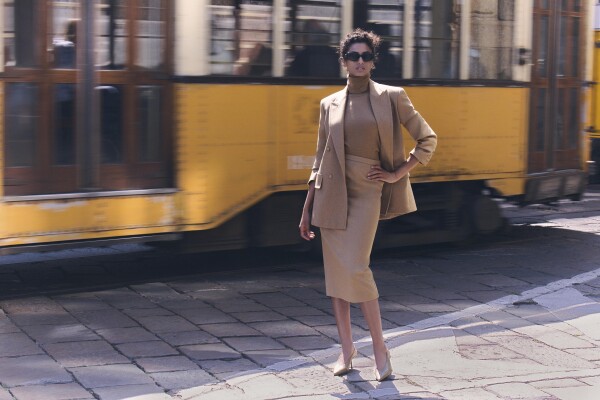 Max Mara Fall/Winter 2026.
‘Beretta was designing coats and jackets with enormous shoulders, but the oversized boom of the 1980s had not yet arrived. Maramotti immediately understood that this was the right direction, simply ahead of its time,’ explains Max Mara fashion coordinator, Laura Lusuardi.
The 101801 was followed by the Ludmilla coat in 1992—a double-faced pure cashmere creation so lustrous, it resembled satin—and the Manuela in 1998: a perfectly proportioned belted wrap coat in pure camel that remains a permanent fixture in boutiques to this day. More recently, the Olimpia—a double-breasted jacket in soft camel—was introduced in 2024.
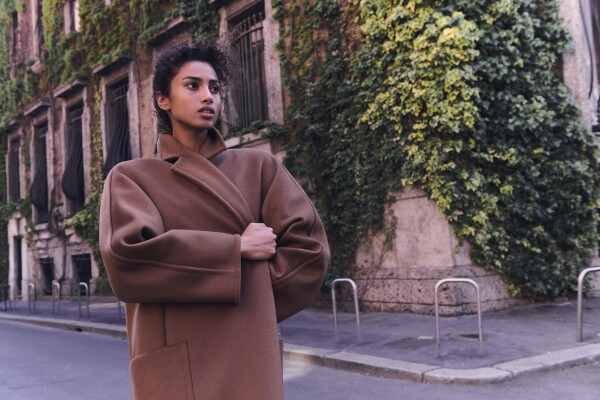 Max Mara Fall/Winter 2026.
Accessibility is another value that remains integral to Max Mara’s DNA. The house has always championed a luxury that is achievable, without sacrificing excellence. This commitment to quality extends from fabric selection to stitching and composition, with a fifth of manufacturing steps still carried out by hand. Every Max Mara piece takes shape over four to five hours, a testament to the enduring craftsmanship that has made it a fixture in the wardrobes of generations of discerning women.
Over the past 75 years, Max Mara has continued to evolve alongside the women it dresses. From impeccably tailored suiting with an unmistakable sense of authority to refined accessories that marry utility with elegance, the brand has built a wardrobe for modern womanhood in all its forms. Creative collaborations with visionaries including Emmanuelle Khanh, Karl Lagerfeld and Luciano Soprani have helped shape its enduring design language, while campaigns captured by the likes of Steven Meisel and Richard Avedon have defined its visual identity. Beyond the collections themselves, landmark exhibitions, cultural initiatives and its highly anticipated annual Resort show have cemented Max Mara's place as one of fashion's most influential houses.
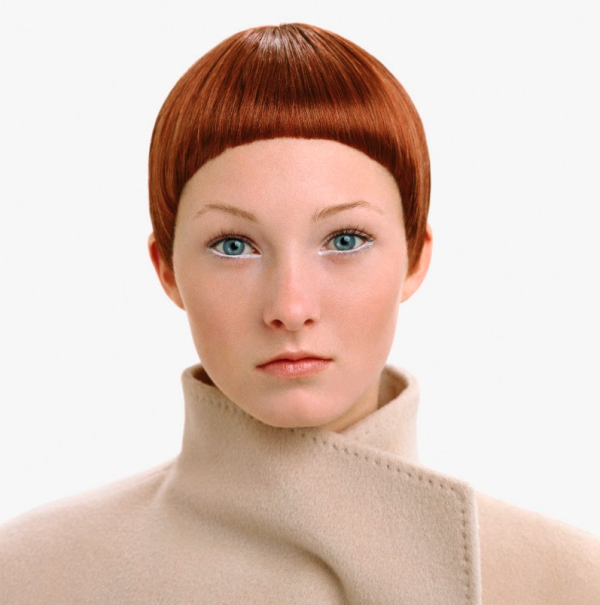 Maggie Rizer photographed by Richard Avedon for Max Mara Fall/Winter 1998.
Now, in 2026, Max Mara marks its 75th anniversary by revisiting its archives with three limited-edition reissues—a celebration of a company that has always looked to its past to inform its future. Drawn from its ever-evolving ‘living archive’, the Meridian (1994), Millenia (1998) and Metric (2015) are reimagined in featherweight pure cashmere while remaining faithful to their original silhouettes. Limited to just 200 individually numbered pieces per style, each coat is accompanied by a bespoke tag featuring its original sketch and story. Distinctive details—from the Millenia's camel cashmere and vibrant yellow lining to the Metric's signature beige cacha finished with a blue interior—pay homage to the originals while reaffirming their enduring relevance.
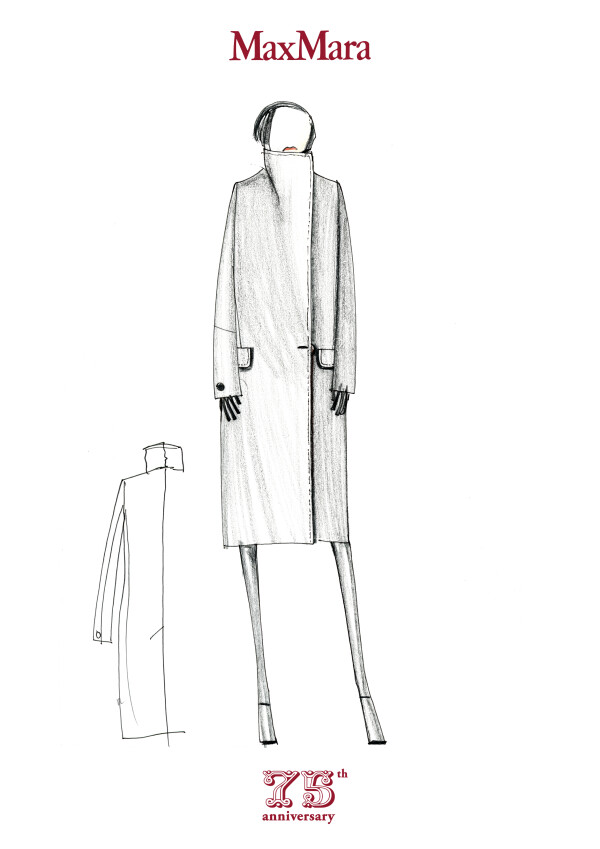 The original sketch for the Max Mara Millenia coat.
That commitment to preserving and continually reinterpreting its heritage was most recently expressed through The Max!, an exhibition staged at Shanghai's Long Museum to mark the brand’s 75th anniversary. Curated by renowned fashion historian Olivier Saillard, the exhibition recreated the dynamic spirit of Max Mara's Biblioteca e Archivio d’Impresa (BAI), the institution dedicated to collecting, cataloguing and safeguarding the house’s history. Spanning 4,000 square metres and home to approximately 300,000 pieces—from archival garments and collaborative works to advertising campaigns, research materials and press clippings—the BAI is more than a repository. It is the house’s living memory, in constant dialogue with the present: where decades of craftsmanship and creativity are not only preserved, but continually rediscovered.
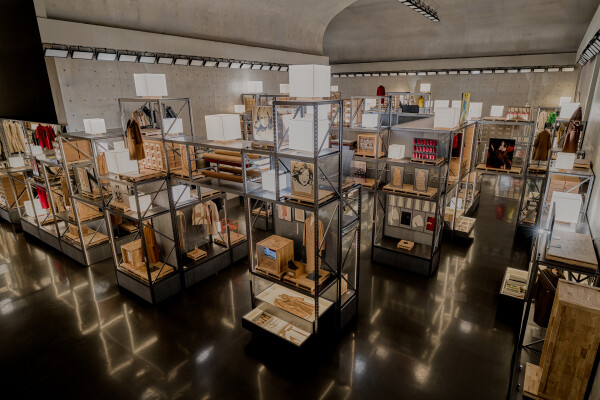 Max Mara's The Max! exhibition in Shanghai celebrated 75 years of the brand's history.
Looking back on Max Mara's enduring legacy, Saillard sees the house continuing to play an essential role in the future of fashion for the everyday woman.
‘I see Max Mara as a great design company that has embraced major creative names without ever losing sight of its original ambition: to offer a timeless wardrobe for everyone, one that does not vanish in favor of ephemeral trends,’ he tells us.
‘To me, this is the most contemporary characteristic possible, as well as the noblest. I continue to believe it is an essential key for the future.’
NZ.MAXMARA.COM
Advertisement