Everyone’s going analogue—so why are we still posting about logging off, and does it even really matter?
It is indeed satisfying to watch movements roll around with renewed curiosity again. Where the generations that came before had almond chai lattes, the new generation drinks strawberry matcha. We spent our mornings sweating it out at hot yoga, now it’s pilates princesses. That is to say, the tides will always ebb and flow. Digital detoxes, a concept that is still only in its earliest iterations, has since been reimagined in the social media landscape as an analogue life—that is to say, people are heading online to talk about how they’re leaving the sphere for an offline life.
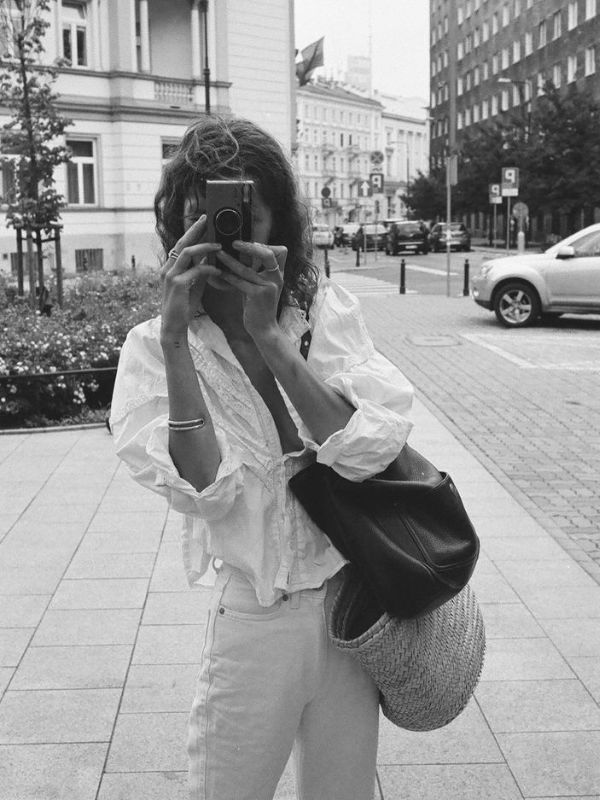
Creators are taking us on tours of their ‘analogue bags’, whimsical totes and baskets stuffed with activities designed to draw their owners away from their devices and fill the internal void with a new kind of busyness: there are knitting needles, micro-puzzles, Sudoku books and word searches. They all sound like joyous hobbies, but one does have to ask—are they to be used, or are they simply just for show?
As editor Tarito Makoni so deftly points out in her beloved Substack, Trademarked, ‘We’re not obsessed with analogue—we’re obsessed with performing analogue.’ She goes on to suggest that it’s a lesson we should have learned from our frictioned fascination with quiet luxury: that culture doesn’t desire ‘The Thing’ (that being an analogue life), but instead craves the signalling mechanisms surrounding it.
She’s got the screenshots to prove it, too. Search data from Google Trends shows that searches for the term ‘analogue’ have been on a steady rise in the last five years, finally peaking in early December. And yet, while I think there is a point to be made here—because it is indeed very paradoxical that we’re boasting about our newfound analogue hobbies on one of the busiest platforms on the planet: if we’re spending more time on things that bring us back to the immediate and the present, is there really anything bad in that?
It’s quite delightful, I think, to see a renewed interest in having hobbies again. How boring life was without them. I am revelling in dance classes and puzzles and taking my silly little wordsearch book to a cafe on a Sunday morning. Call me performative, but my brain feels softer for it.
And I’m not alone in my embrace. A 2026 leisure study from the University of Sussex found that people report greater enjoyment from purposeful pastimes (like listening to music, playing instruments, reading, crafts) than from passive ones like scrolling social media—suggesting a collective shift toward more fulfilling activities. Additionally, there has been a behavioural research paper on ‘leisure crafting (how people intentionally shape their free time around learning, goals and social connection) which showed that engaging in hobbies can boost not just personal wellbeing but also workplace creativity and engagement. Am I right in thinking we’re all feeling a little better for it? After all, longer running studies and research show that not only does regular hobby participation predict better mental health, life satisfaction and lower depressive symptoms across age groups and countries, but research across 19 countries suggests that starting and maintaining hobby engagement over time is linked with better overall health and lower mortality risk among older adults. It is genuinely our hobbies, the things that we embark on for the sheer joy of them, that do keep us vibrant and golden.
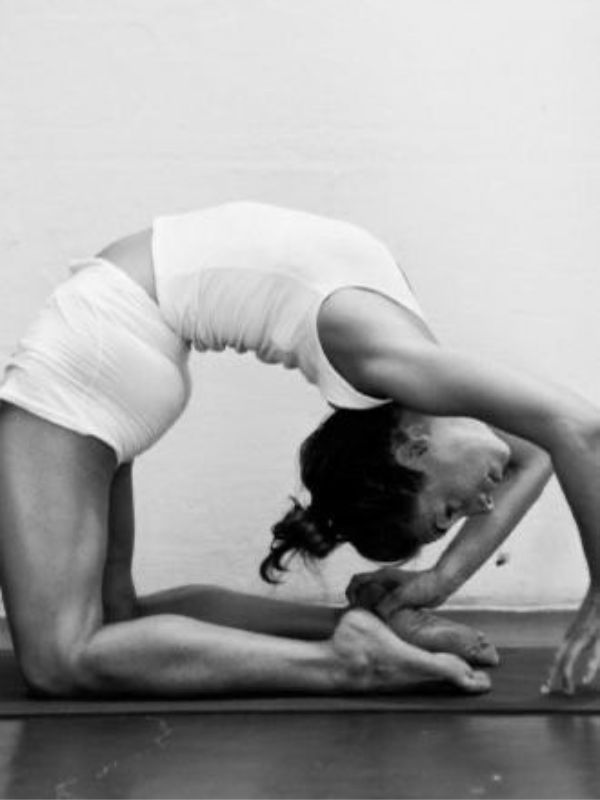
I don’t have an analogue bag yet myself, but one of the most peaceful, meditative moments I’ve had this year was a night spent at home alone, free from digital frenzy. I was working on a puzzle I’d picked up when I was sick, something designed to get me off the sofa but that didn’t require the kind of attention a book might. As puzzles have a pervasive way of tending to, this had been sitting on our (relatively small) dining table for a couple of weeks, and consequently, we’d been eating our dinners together on the floor. But back to the meditative aspect (for this isn’t a piece about—I put on an old record, pottering around the puzzle for a good hour or so, and found myself falling into a very genuine trance-like state). The kind that you only get from a deep savasana after a really long yoga practice, or perhaps another kind of psychoactive.

It had me a little convinced on this whole analogue thing. How is it that our bodies know that it is time to enter this little haven? And what is it about a puzzle that prompts it so? Studies suggest that it is a collision of cohesive chemicals, which Psychologist Mihaly Csikszentmihaly coined the term we now so fondly (and ironically, digitally) have come to know as flow state. Here, our brains are engaged just enough to prevent rumination, but not so much that they trigger stress. In flow, the prefrontal cortex (the self-critical, time-aware part of the brain) quiets down—a phenomenon sometimes called transient hypofrontality, which is why time can feel distorted, the body and brain find a strange weightlessness, and we begin to dissolve into the task at hand.
And flow state is not alone in this moment. Puzzles activate the brain’s reward circuitry, releasing a slow, steady trickle of dopamine—a steadiness that produces calm focus—compared to social media’s sharp spike. Music in the mix adds another layer: tempo and familiarity-dependent, it is thought that music can lower cortisol and increase parasympathetic nervous system activity (the calming effect), as well as synchronising breathing and heart rate to a singular rhythm. When the music is familiar, or even just predictable, it reduces the cognitive load even further. But then again, I’ve always been a sucker for nostalgia. It’s thought in times of my puzzle-induced trance that there is reduced Default Mode Network (DMN) activity, peeling back the pressure from overthinking, self-analysing, in turn reducing the always pervasive inner narrative and creating space for something delicious to come. Bilateral stimulation has a certain subtlety that still insists on working its way to the surface: in a puzzle, for example, by moving pieces with your hands, scanning visually, alternating attention left and right, you’re engaging both hemispheres rhythmicallly, and this kind of bilateral stimulation is also used in therapies like EMDR because it helps regulate emotional processing, and it’s even thought to lead to mild dissociation—the good kind, I promise.
If this is what turning to an analogue hobby for a brief moment can do to the brain, I think that its impact on our long-term wellbeing seems almost irrefutable (although I’ve not got the credentials to call it). And who cares if we’re caught up with sharing it all online? As long as we’re still participating in the puzzle in equal measures.
Advertisement