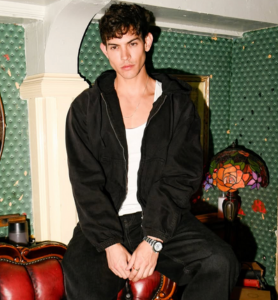
Stars Sophie Turner and Archie Madekwe share their favourite secrets behind the much-anticipated new series, Steal
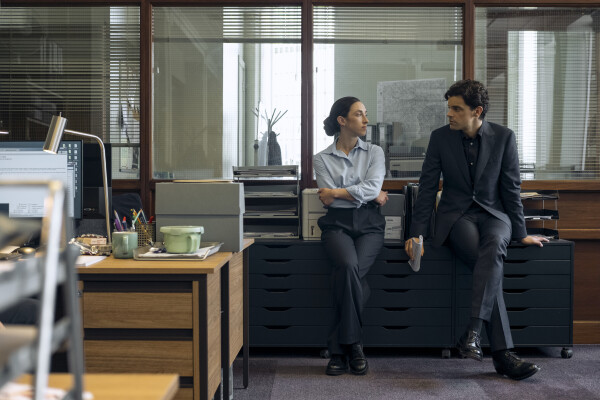
Set in a version of the present that feels uncomfortably close to home, Steal is a heist series less interested in slick bravado than in the quiet pressures that push people to the edge. The much-anticipated new show threads together ambition, money, secrecy and survival, building tension not just through the mechanics of the crime itself, but through the inner lives of the people at its centre. It’s sharp, funny and unnerving in equal measure—a series that understands that the most compelling twists often come from character, not spectacle.
In an exclusive conversation with Remix, stars Sophie Turner and Archie Madekwe unpack what drew them to the project, from its distinctly modern setting to its layered writing and emotionally charged relationships. They talk candidly about the demands of filming, the pleasures of working together, and the unseen backstories and secrets that shape their performances. Along the way, the pair reflect on what Steal reveals about money, morality and the uneasy feeling that, right now, the rules don’t quite work for anyone.
Premiering exclusively on Prime Video January 21, 2026.
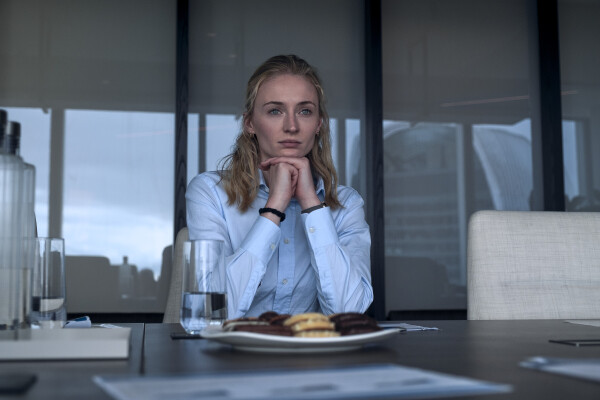
I really want to know, to begin with, what drew both of you to Steal: to the script, to the show, to the project—what was it that pulled you in?
Sophie Turner: I think it was a bunch of factors for me. I think it was the fact that it was set in modern day, because I don't know, I rarely take jobs set in modern day, and then I think it was just the fact that there are so many elements to this story. There's, you know, a beautiful friendship, there's a mother-daughter relationship, there's a huge heist. I mean, it just feels like it's got something for everyone. It's funny, it's scary, it's everything all at once. Everything everywhere, all at once.
Archie Madekwe: I was just really surprised by the writing. I think Sotiris [Nikias] wrote such brilliant, exciting, anxiety-inducing scripts that you could feel that immediately in the first few episodes, and I found myself wanting to keep finding out what happened. I had a conversation with Sam [Miller], and I was excited about the idea of working with him. I loved I May Destroy You, and the ideas they had to build the world. I also felt like it was a world I hadn't really been part of, and something so modern. And the idea of working, I don't know, the idea of an office job, of working in something pedestrian on screen, that's something I hadn't been a part of.
What were some of those more demanding moments and scenes for you both to film, and then on the other side, where did you get to just really relax and have fun with the role? Or do they kind of go hand in hand?
AM: I think anything that we were doing together, we were having fun. We just had so much fun on this job. We just laughed the whole time. So anything in any of our scenes, we had fun. But, I mean, you had stuff. The whole thing was pretty good.
ST: Honestly, I don't remember shooting this, to be honest.
AM: Yeah, it was kind of, I blacked it out. But, I mean, there were a lot of stunts.
ST: There were a lot of stunts. There were a lot of, oh, you know what? The most challenging thing for me was that there was, like, I think it was an 11-page scene, and I wasn't doing all that much talking in the scene. And so it can be quite tiring when you're just kind of standing around waiting for everyone to stand around…
AM: There were a couple of those, did you—yeah that one, actually…
ST: But that was, that was honestly just the big dialogue scenes and also wrapping my head around the money jargon.
AM: Yeah, that was tough. You know, it's such an alien world, I think, to us both understanding cold wallets and crypto and all of those things. It was an education.
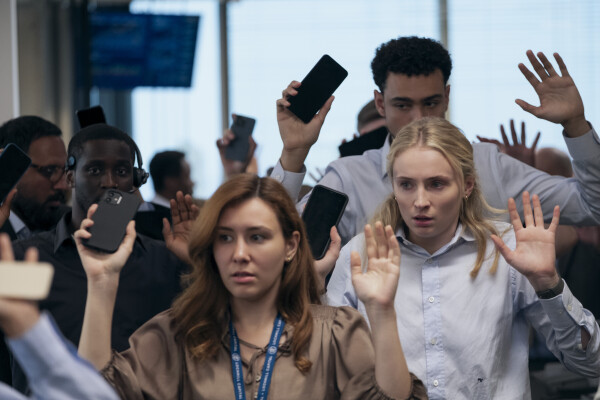
Even as I was watching it, I was like, ‘Okay, what does this mean?’
AM: Just go along with the ride. We don't even know—it was like Succession. You nod and think, ‘okay, the big twist in a minute’.
Both of your characters have a lot of layers and secrets, and I don't know how much of them you'll be able to talk about, but I wanted to know how you, as actors, add those layers and add those secrets and portray them in ways that feel authentic, and if it's hard to carry as actors when you're performing?
ST: How do I make them layered? I mean, I just come up with my own secret backstory that I don't tell anyone about except for Anastasia [Hille], who played my mum—we would discuss our backstory and our history and and there's no scenes to be written in to do with that backstory, but it's just something that you keep and then little nuances come out because of it. It’s a long time writing up interesting secrets I have about the character and seeing if they come out.
AM: It’s probably quite textbook to most actors. But you're always trying to create a deep inner life for your character and having secrets and pride, thoughts and shame. And you know, what do I feel excited about? What do I feel ashamed about? All of these different things that we all have as human beings. So all of that stuff exists under the surface. And you maybe don't say it out loud, but maybe you can feel it in the nuance of how you play the character.
And does that help you in creating a deeper connection to your character, as well as creating your own kind of backstory?
AM: Definitely, I think, the realer, the fuller picture of a character you have, the more information, the more you know the picture is coloured in, the stronger connection you have, the more you know them, the more ownership you have of them.
I don't know if you'll be able to answer this, but there are many moments throughout the series where there are big revelations, or we, as the audience, are let in on little secrets along the way. Do you have a favourite one for either of your characters?
AM: Secret? Yeah, well, can't tell you that. Can't say favourite secrets.
ST: Any fun ones?
AM: I've got one. Where was—when the show starts? Where was our the night before? She'd been out.
ST: Oh yeah, she'd been out.
AM: Can't remember. We've really shot this a long time ago. She starts super hungover.
ST: Yeah, I do start super hungover.
AM: Do you remember where—
ST: We've gone to the club?
AM: Oh yeah, was that done before?
ST: I think so—
AM: Yeah, I think it was, yeah. But no, haven't really got one that we can share, because it just ruins the entire show,
ST: I know. And the secrets start in episode one—we don't have much we can say.
I'd love to know the broader context of Steal and what you think the show is saying about human nature, about money, about ambition, and about society as a whole right now?
ST: I think when the world can be so bleak for a lot of people, people resort to extremes, to the extremities, and this is a show that details what makes good people do bad things. And, you know, with the cost-of-living crisis right now, that's kind of portrayed in this show as well. It's kind of no wonder that—no, I can't say anything. It's no wonder that these people do crazy things.
AM: Yeah—I think a lot of people feel very stuck and quite trapped right now. The world feels like there's not a lot of hope in it for people's situations. It feels scary, and yeah, people definitely resort to quite surprising things to change their circumstances.
ST: And who can blame them?
I feel like that sums up the show quite well, but also still quite coded. Everyone's going to have to go and watch the show. Thank you so much again for taking the time, and I can't wait for our readers to read the article and go out and watch the show next year.
ST: Thank you so much.
Advertisement