With season three almost over, Euphoria’s makeup artist Donni Davey shares her latest secrets
I’d only seen one episode of Euphoria’s third season when I got on the phone with Donni Davey. Acting and soundscape aside, make-up is what defined the show’s success: it spurned viral trends, parties, and key moments. The world seemed to fall in love with colour and glitter again. And it catapulted Donni’s career, cementing her as one of the industry’s most sought-after (and where she’s headed next is very exciting, I’m assured).
It should be said, though, that this Season 3, set five years on from the last, doesn’t offer that same sense of ecstasy and escapism. Life is grittier, more real, and despite criticism (or do we all just pine for our teenage years?) and without much backstory to guide her, Davey had to figure out a way to translate this growth on screen.
If you scroll the artist’s socials, it’s evident just how much work goes into creating each character: understanding who they are, and how their approach to beauty defines them, at least in part. We track this evolution together. Season 1 was built around experimentation and self-expression—something the artist has dubbed ‘dopamine makeup’—where looks ebbed and flowed with the characters’ pubescent emotions. And she tells me that it was always intended to Feel accessible rather than intimidating.
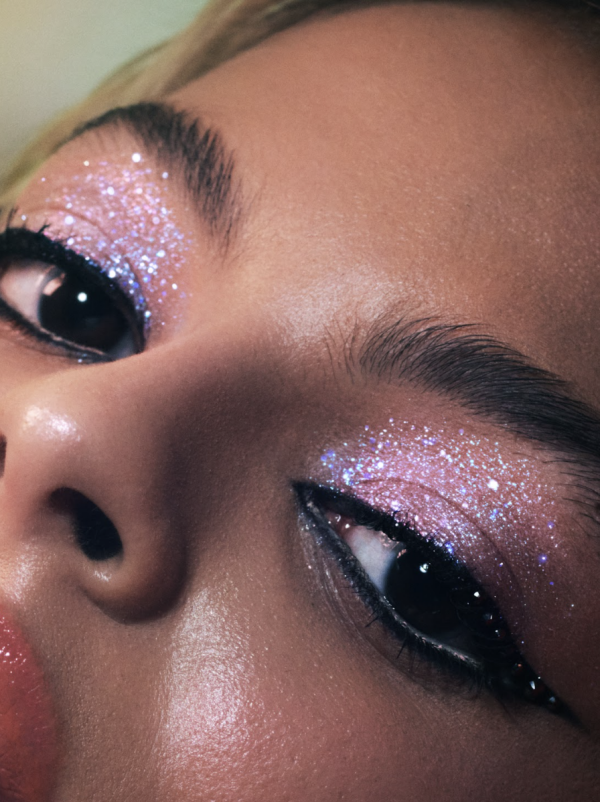
Those who followed along at home will attest, Season 2 took the show somewhere darker, which saw Davey responding with toned-down colour and an intimate focus on the details. Now at Season 3, the aforementioned shift in intention. ‘I’m calling the makeup this season ‘feral’ because it has this primal energy to it,’ she explains, and I agree. ‘It’s being used very specifically for an outcome—survival, really. For these girls, that means money, fame and success. So the makeup becomes as important as anything else in how they navigate the world.’
We spend some time talking about what it was about the early days of Euphoria that really captured an audience. Sure, it was fun, and it challenged the norm. But I think it also came at a time when people were so used to being told they had to look a certain way to be beautiful (the clean girl aesthetic was really having a moment), and Donni Davey—whether intentionally or not—sought to shift that perspective.
‘They weren’t on a model walking down a runway with a straight face,’ she hypothesises on why it resonated, ‘they were girls having explosive life moments. They were flawed characters. You’d see flushed skin with glitter or rhinestones or a sharp liner, and it just felt real.’
And without it ever really being the objective of her work, the artist somehow managed to shift the defining looks of this era.
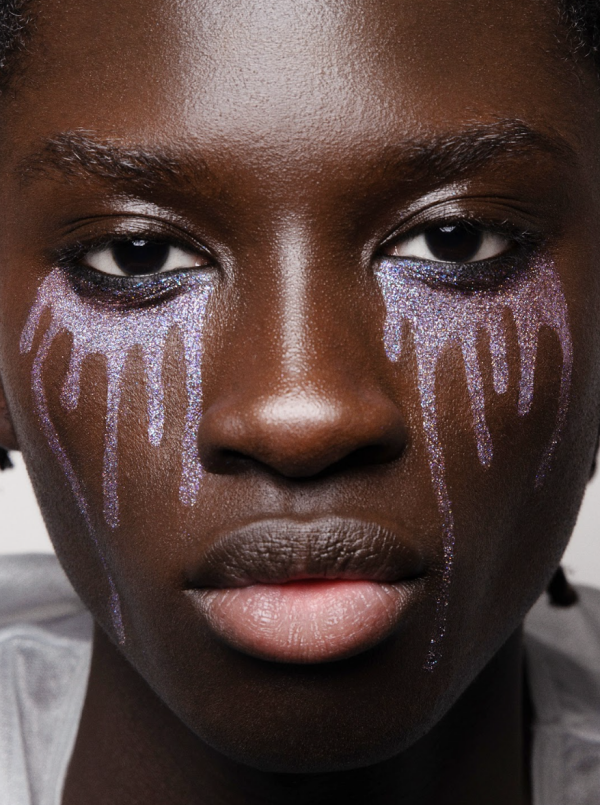
It is often said that the best business ideas are born from trying to solve a genuine problem, and I think that’s what makes Half Magic so brilliant. Davey tells me that the products—which often help the user create the ultimate Euphoria makeup, and even more so with the official collaboration that just entered into Mecca—she created while working on set, racing against the clock, needing products that could keep up. There’s a pragmatism to it that feels refreshing in a category so often driven by aspiration alone. These are tools designed to fix, to adapt, to perform under pressure—whether that’s under studio lights or in the backseat of an Uber. I’m assured that if they work there, they’ll work anywhere.
It also explains why Half Magic doesn’t feel intimidating. There’s no sense that you need to be particularly skilled to engage with it, nor that you need to subscribe to a singular idea of beauty. Instead, it is an invitation to play, to experiment, to try something slightly outside of your everyday without the fear of getting it wrong. In many ways, it mirrors the same philosophy that underpinned Euphoria’s earliest looks, just translated into product form.
Of course, building a brand of this scale wasn’t necessarily part of the original plan. Davey is quick to remind me that she came up through film and television, not the traditional beauty pipeline. The past few years have required her to learn an entirely new language—product development, manufacturing, pitching to investors—alongside the work she was already doing. It’s a different kind of creativity, one that sits in contrast to the instinctive, often chaotic energy of being on set.
And then there’s the personal shift that comes with it. For someone who once struggled with stage fright, the idea of speaking in front of thousands or consistently showing up on camera would have felt unlikely, if not impossible. Now, it’s part of the job. There’s an ease to the way she speaks about it, but you get the sense it’s been hard-won—another evolution running parallel to the work itself.
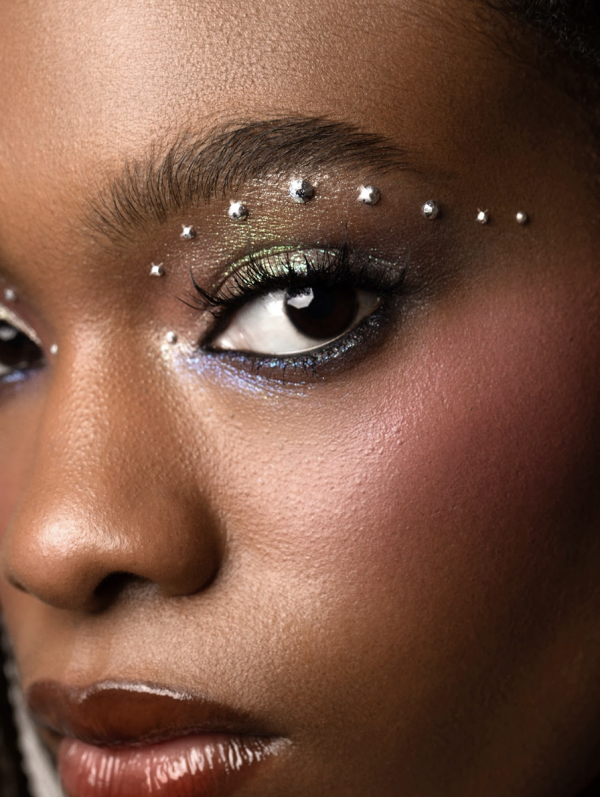
That tension—between control and instinct, business and artistry—feels like a defining thread in everything she does. It’s present in the way she talks about makeup, too. On set, she tells me, it isn’t about perfection. Lighting is unpredictable, often unflattering; the looks shift depending on the scene, the mood, the story being told. What matters is how it reads in context. ‘It’s not just pure glam—it’s storytelling,’ she says, and it’s a distinction that feels increasingly important in a world that so often prioritises the finished image over the process behind it.
Back in Orlando, that connection plays out in real time. Fans approach her to share what the makeup meant to them, how it made them feel, what it allowed them to try. It’s a level of visibility that still feels slightly surreal for the artist, particularly for work that traditionally sits behind the scenes. But there’s also a sense of satisfaction in it—of being recognised for something she’s built, both on screen and beyond it.
When I ask if there’s one moment she’d freeze, she doesn’t hesitate. The glitter tears scene from season one—Rue and Jules, in that softly lit bedroom—still stands out. Not just because of how it looked, but because of the energy on set while they were making it. That instinct, that sense of excitement, is still what drives her. Everything else has grown around it. Her world has grown around it.
Advertisement