
Perpetually Oyster
Someone had to be the first. Tessa Patrick discovers, 100 years on, why it was always meant to be Rolex.
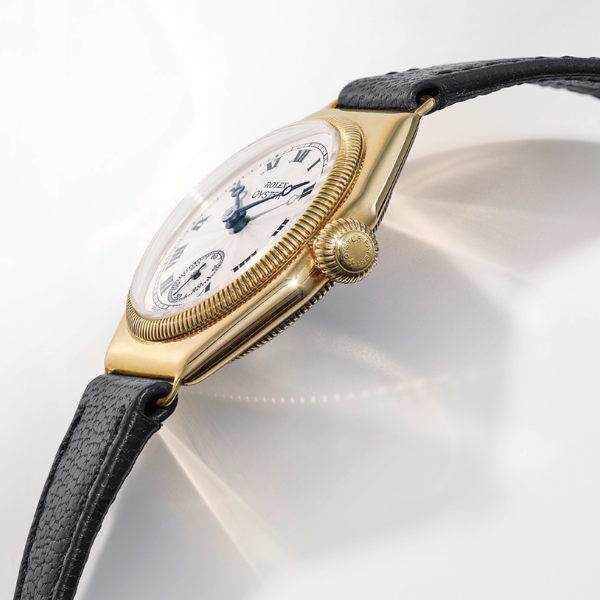
Those who know wristwatches know that a century ago—before 1926—the timepieces were fragile, dust-prone, and were never really able to withstand what life asked of them. Men, especially, shared this way of thinking. Pocket watches were favoured here. A feminine interpretation was mere fashion accessory. And so, when Hans Wilsdorf finally released Rolex’s Oyster in 1926, housed in a waterproof, dustproof case, it shifted the collective perspective. It changed the way we saw time.
It was as radical then as it is obvious now. Beyond elegance and cleverness—two words often associated with Rolex’s deft craftsmanship—Oyster was initially about survival. Precision, waterproofness, and self-winding were the three major challenges of the time, and the three fundamental achievements that initiated a legacy.
It faced its first true test in the frigid waters of the English Channel, where, in 1927, British swimmer Mercedes Gleitze survived a 15-hour and 15-minute swim (her second crossing, if you know the lore), sporting one of the earliest Oysters on her wrist. While the watch survived the freezing journey—it was significantly colder than other times of year—Gleitze nearly didn’t. What followed is now part of watchmaking canon: Rolex placed a full-page advertisement announcing the success. The Oyster had been tested in conditions that resisted abstraction, and it had endured.
Lesser thought about, but equally important beneath that moment was a shift in how credibility was built (something that has become synonymous with the brand). Rolex released reliance on description and displayed its prowess with evidence. The Oyster became inseparable from the idea of proof—something verified under pressure, witnessed, and then retold.

In 1931, the next layer arrived. The Perpetual rotor—Rolex’s self-winding mechanism—introduced a different kind of continuity. If the Oyster sealed the watch against the outside world, Perpetual ensured that what sat within did not require interruption. Motion from the wearer powered the movement; time sustained itself through use. It is here that ‘perpetual’ shifts from description to philosophy. The watch no longer needed to be stopped, opened, or reset as part of its daily life. It moved with the body and, in doing so, maintained its own rhythm.
Together, Oyster and Perpetual form something more complete than either term suggests on its own. A sealed exterior, a self-sustaining interior: a closed system designed for endurance. This pairing set new standards that the entire watch industry has since adopted, exemplified by models like the Rolex Submariner, Explorer, and Datejust, each extending the original principles into new environments and daily life.
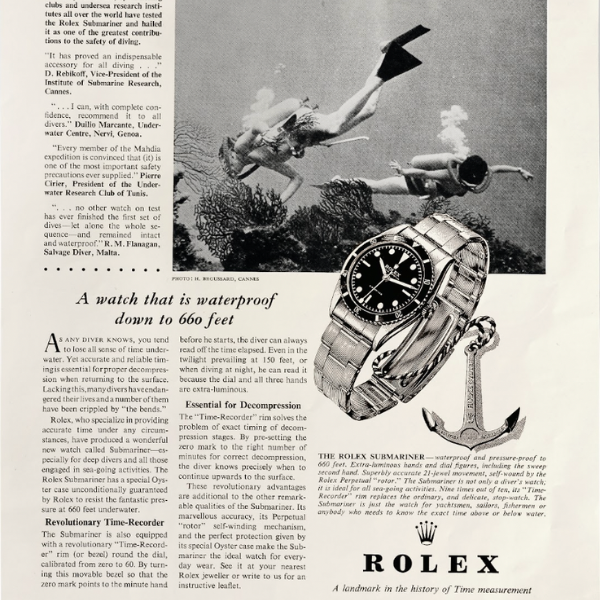
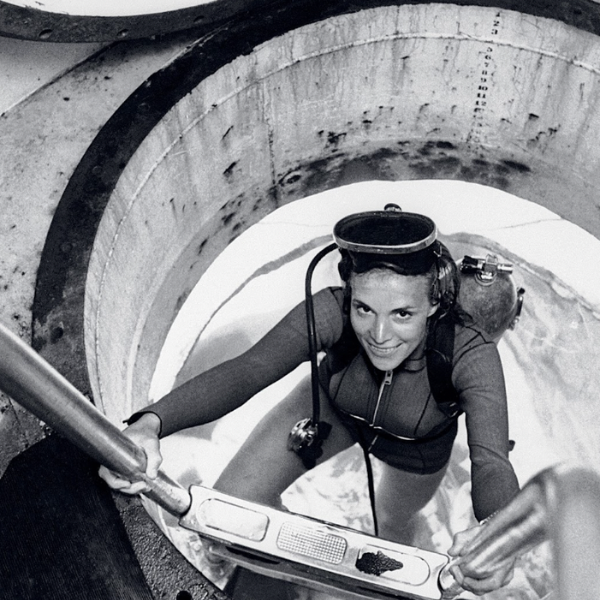
And that reliability, over time, becomes cultural. Rolex has built its authority through repetition of validation. Environments of stress—oceans, summits, endurance—become stages on which the watch shines.
Since then, Perpetual has extended beyond the mechanics of a rotor. Within the Rolex Perpetual Arts Initiative and the Rolex Perpetual Planet Initiative, the term speaks to continuity in culture and environment rather than movement. In conversations with testimonees and those supported through these programmes, a similar idea emerges: that meaningful work is defined by more than a single output, instead by its capacity to influence. The artists, architects, scientists and explorers championed here operate within that same logic of sustained impact.
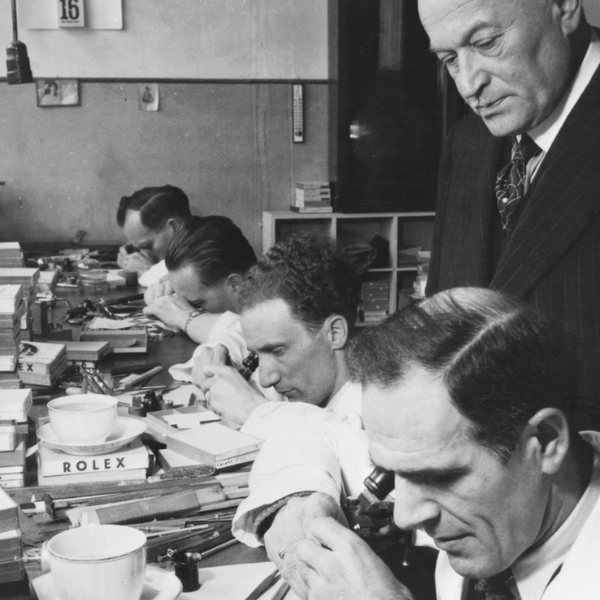
And so now, a century on, the Oyster has not drifted far from its original proposition. Waterproofing, once a radical ideal, is now assumed across the industry—so embedded that this impressive feat is often forgotten. That, perhaps, is the clearest measure of its success. The solution became standard.
Since its first endeavours across the English Channel, Rolex affirmed the wristwatch’s legitimacy as an idea worth investing in. Before it was anything else, the Oyster was a claim that a watch could belong to the real world. And just look at it now.
Advertisement